Traditional Masculinity and Marriage: Why the Old Model Fails
Feb 14, 2026
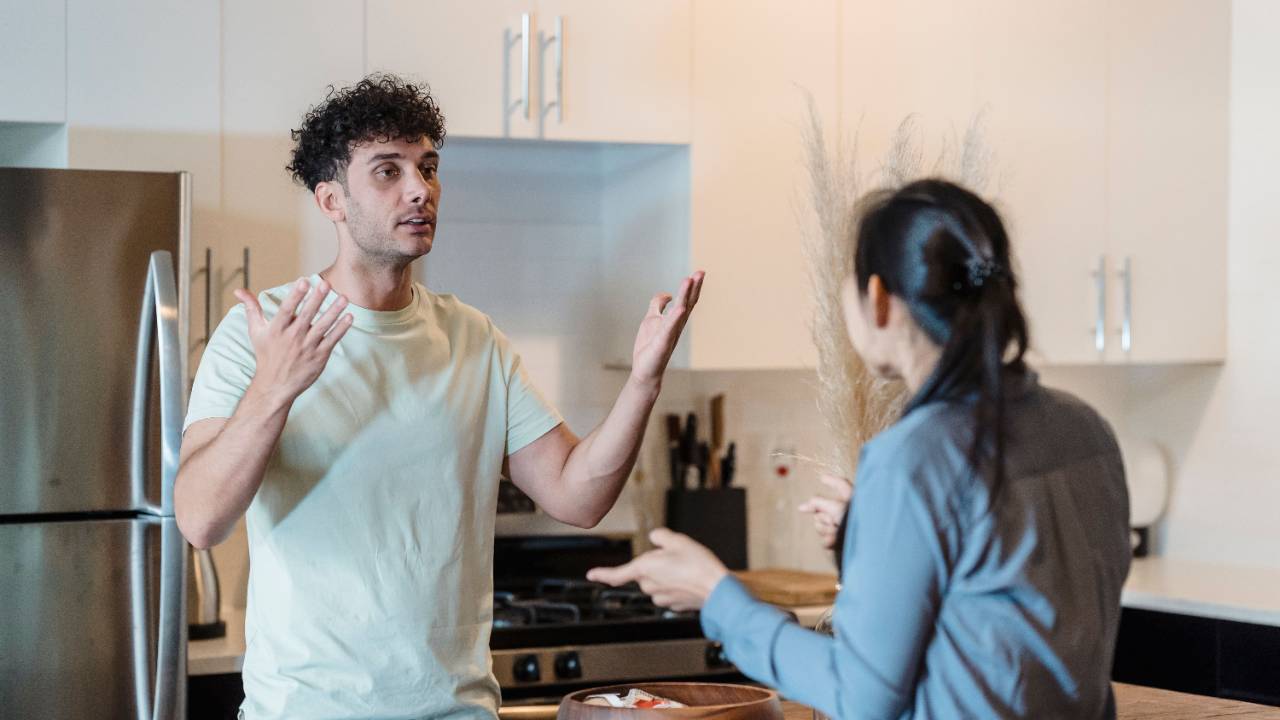
Few words stir as much tension as masculinity. For some men, even hearing it triggers defensiveness, exhaustion, or an urge to check out entirely.
That reaction matters.
Because if talking about masculinity unsettles you, it’s often the same reaction that shows up when your wife brings emotion, dissatisfaction, or unmet needs into the marriage. The discomfort is directly connected, not completely random.
Most men were raised with a clear message about what it meant to be a man: be logical, be steady, be strong, keep emotions contained. Vulnerability wasn’t encouraged; it was quietly discouraged. For many of us, that model worked well in the outside world, because it helped us succeed professionally and earn respect.
But what works “out there” often fails at home.
As therapist Terry Real famously puts it: what you learned as a boy about being a good man will almost guarantee you’ll be a lousy husband.
That doesn’t mean masculinity is the problem. It means the version of masculinity we inherited is incomplete.
From Competence and Control to Emotional Courage
I grew up with well-intentioned role models who taught me that being a man meant being composed, controlled, and capable. That message was reinforced everywhere, be it school, sports, or friendships.
And ironically enough, it rewarded me. I succeeded academically, built a career, and eventually entered the fire service, where toughness wasn’t just valued, it was admired. I learned to handle chaos, danger, and high-pressure situations without breaking. In the firehouse, that kind of masculinity worked.
At home, it didn’t.
I believed that providing, protecting, and staying steady would be enough. But my wife was asking for something I didn’t know how to give: emotional presence. Openness. Connection.
It wasn’t that I was unwilling. I simply didn’t know how to access what was happening inside me. Vulnerability had never been framed as strength. Intimacy had never been modeled as something men were responsible for cultivating.
That gap nearly cost me my marriage.
What I eventually learned is this: the traits that help men succeed in the world—stoicism, independence, invulnerability—often make emotional intimacy nearly impossible at home.
The Three Incomplete Models of Masculinity

Masculinity hasn’t been a single, consistent idea. It’s moved through phases, and you might find yourself stuck swinging between extremes. Here are some of the quintessential phases you’ve probably noticed:
- Traditional masculinity
This is the model most men were raised with. Be strong. Don’t complain. Don’t show weakness. Handle your problems alone. The underlying message is clear: a real man is invulnerable.
That approach may help with survival, but invulnerability and intimacy cannot coexist.
- The sensitive man
In reaction to traditional masculinity, some men swing to the opposite extreme. They become emotionally open but lose grounding and strength. Their vulnerability has become dependence, and their sensitivity has replaced steadiness.
That doesn’t work either. Most women don’t want to carry a man who can’t hold himself. That’s not to say you shouldn’t expect support from your partner, but as one half of the partnership, there’s a level of personal responsibility that is intrinsic to your marriage.
- Reactionary masculinity
Today, we’re seeing a backlash. Some men have doubled down on dominance, control, and defiance. It looks powerful on the surface, but underneath it’s still driven by fear of vulnerability and intimacy.
Different packaging. Same avoidance.
The irony of these phases is that none of these models prepare you for real partnership. To achieve that, it’s necessary to look beyond this cycle.
A Different Path: Wholeness
There is another option.
It doesn’t require giving up strength or edge. It requires reconfiguring power.
Wholeness means holding strength and vulnerability at the same time. Leadership and tenderness. Confidence and emotional availability. If your first reaction is that this sounds like becoming less of a man, think again. It’s actually about becoming a whole one.
A whole man can be strong in the world and open at home. You can provide and protect and connect. As a whole man, you interweave power and love, rather than abandoning one or the other.
This path is uncomfortable because it’s unfamiliar. Most men never saw it modeled. Culture doesn’t reward it. Friends may not understand it.
But unfamiliarity doesn’t necessarily mean something is bad. Think about all of the times you’ve done the most growth in your life, and it’s probably come with a lot of its own discomfort! And although unfamiliar, this is the path that actually works in marriage.
What It Costs to Stay the Same
If you don’t change, nothing may feel urgent at first. Your life will go on, you’ll get your work done, and bills will get paid. But slowly, the distance between you and your wife will grow.
After a while, maybe she feels alone, conversations become tense or shallow, and intimacy fades. Resentment builds quietly until one day she says she doesn’t know if she can keep doing this. And you’re stuck wondering how you two got to this point.
Even if the marriage doesn’t end, the cost is still high: emotional disconnection, eroded trust, and children who never see what emotionally engaged fatherhood looks like.
There’s a cost to you, too. Carrying invulnerability is heavy. Men who stay shut down pay for it with their health, their relationships, and their sense of meaning.
The risk of staying the same is greater than the risk of changing.
Four Ways to Start Living as a Whole Man
This shift doesn’t happen overnight, but you can start this week.
- Reflect on what you were taught
Notice where traditional masculinity helped you succeed, as well as where it’s hurting your marriage.
- Admit you may need support
Change doesn’t happen in isolation. Find a mentor, coach, group, or trusted guide. Start with a friend if that level of trust helps the process.
- Begin naming emotions
Start simple: mad, sad, glad, afraid. Notice when one shows up, and then make it a habit to name it.
- Drop the armor at home
Your wife doesn’t need the firefighter, the CEO, or the warrior (nothing wrong with falling into one of those categories, though!). She needs you—present, open, and connected.
This isn’t about doing it perfectly. It’s about doing it differently.
Questions to Sit With This Week
- When did I first learn that vulnerability wasn’t manly?
- How has traditional masculinity helped me in the world but hurt me at home?
- Which part of wholeness feels most uncomfortable right now?
- Where in my marriage do I most need support?
Sit with these questions, and journal them if you can. Better yet, bring one into a conversation with your wife.
The Man Your Marriage Actually Needs
The old playbook may have worked in your career or in crisis situations, but it will fail you in marriage.
The way forward isn’t about losing strength. It’s about becoming whole: strong and vulnerable, courageous and open, powerful and loving.
That’s the man your marriage needs. That’s the man your kids need. And that’s the man you were meant to become.
This work is uncomfortable precisely because it’s heroic. If you’re even considering it, you’ve already begun.
–
Continue the Work
Listen to the full podcast episode where I go deeper into these phases of masculinity and what stepping into wholeness actually looks like in real life.
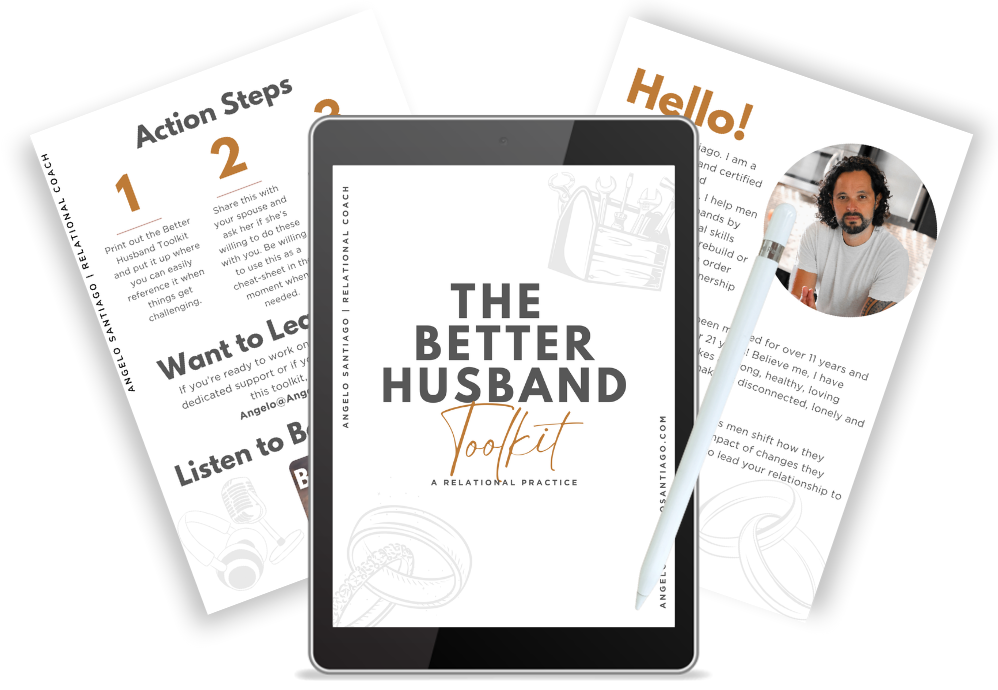
And if you’re ready for practical guidance and real support, check out the Better Husband Workshop, where we break this work down into clear, actionable steps you can start applying immediately. You don’t have to figure this out alone.
Need Help In Your Marriage?
Subscribe to the Better Husband Newsletter to get weekly updates with marriage support, new blog posts, podcast updates and more!
By signing up you consent to receive regular emails from Angelo Santiago with updates and the occasional promotion for services. You can unsubscribe at any time. View our detailed privacy policy in the footer.

Author