
Stop Trying to Be Right All the Time—It’s Hurting Your Marriage
Dec 26, 2025
Most marriages don’t break down because of major betrayals or explosive fights. They erode through small moments that feel insignificant at the time but slowly create distance. One of the most common and damaging moments looks harmless on the surface: the urge to say, “I told you so.”
It often shows up when a partner finally agrees with something that’s been said for months, or when long-delayed change finally arrives and resentment spills out instead of relief. In those moments, many men believe the truth should speak for itself. After all, they were right.
But being right is rarely the same thing as being connected. And in marriage, connection is what actually matters.
Let’s look at why the need to be right damages trust, how it quietly sabotages closeness, and what to do instead when those moments inevitably arise.
The Moment That Tests the Relationship
It usually happens during an ordinary moment: a conversation in the kitchen, folding laundry, or sitting on the couch after a long day.
Your partner brings up an idea, solution, or realization that sounds painfully familiar—something that’s already been suggested, sometimes repeatedly. Instantly, you feel something tighten inside. There’s frustration, irritation, and a strong pull to make sure the timeline is clear.
The urge isn’t always spoken. Sometimes it comes out as a tone shift, a pause, an eye roll, or a joke that carries an edge. But the message lands the same way: You’re late. I was already there.
From the other side, the moment can feel just as charged. You are finally showing up differently, listening better, regulating more, or taking responsibility in ways your partner has asked for over the years. Instead of appreciation, you’re met with anger or grief. “I’ve been asking for this for years,” you might hear her say. “Why now?”
Both versions of this moment hold the same risk. They can create repair and closeness, or they can deepen resentment even when progress is happening.
Why “I Told You So” Breaks Connection

“I told you so” is rarely about the words themselves. You may never have even uttered these exact words. But that doesn’t matter. Because it’s more about the energy underneath them.
That energy is rooted in the need for validation, acknowledgment, and credit. It wants recognition for being ahead of the curve or for suffering through being unheard. While understandable, there’s no denying that energy turns a moment of alignment into a power struggle.
When your partner finally joins the same page (or vice-versa) and is met with correction instead of welcome, the message received is not wisdom or leadership—it’s superiority. The focus shifts away from shared progress and toward keeping score.
Even when the facts are accurate, the emotional cost is high. Trust softens, warmth drains, and the desire to bring ideas, vulnerability, or change into the relationship weakens. Research from the Gottman Institute identifies defensiveness and criticism as two of the strongest predictors of relational breakdown.
Being right may feel good for a moment, but it comes at the expense of closeness. Over time, those moments add up.
The Hidden Strategy Behind the Need to Be Right
The impulse to be right is often a learned survival strategy. I’ve said it before and I’ll say it again: many men developed this coping mechanism early in life as a way to protect themselves when connection felt uncertain. If being understood wasn’t guaranteed, at least being correct felt solid.
In adult relationships, this strategy shows up as subtle correction, mental scorekeeping, or quiet resentment when a partner “catches up.” It can coexist with good intentions and still undermine intimacy.
The problem is not intelligence or insight. The problem is using correctness as a substitute for connection. That move shifts the relationship from partnership into hierarchy.
Your marriage doesn’t thrive on who arrived first. It thrives on moving forward together with your partner.
The Right Way to Respond in “I Told You So” Moments
Okay, so we understand the what and the why, but now let’s look at how to change.
When your partner brings up an idea that mirrors something already said, the most effective response is deceptively simple: pause.
Let go of the internal timeline. Meet her where she is now, not where she “should have been” months ago. Responses like “That’s a great idea,” “I love that you’re thinking about this,” or “Let’s do it” keep the focus on momentum instead of memory. They communicate safety, alignment, and partnership.
There’s no need to erase the past or deny frustration. The choice is simply whether this moment will be used to build trust or reinforce distance.
If you respond with openness instead of correction, you move towards becoming a partner your wife will want to align with. When alignment feels safe, it happens more often.
When You’re on the Receiving End of “I Told You So”
If you are finally showing up differently, this experience can feel discouraging. You’re putting in the effort, you see your patterns shifting. Except instead of mutual excitement and celebration, you get frustration.
But don’t misunderstand this reaction. It’s not a rejection of growth. It’s grief surfacing after years of unmet needs. Her body remembers what it was like to feel alone, dismissed, or unheard.
So when change finally comes, trust doesn’t automatically follow. There’s fear that it won’t last, and hurt that it took so long.
Meeting that moment with defensiveness or withdrawal only reinforces the old pattern. Meeting it with steadiness, empathy, and consistency begins to rebuild trust. Statements that acknowledge the delay without demanding forgiveness create space. Staying present without requiring immediate reassurance allows healing to unfold at its own pace.
Trust is rebuilt through repetition, not one correct response.
Choosing Relational Leadership Over Emotional Control
Relational leadership doesn’t mean suppressing feelings or avoiding accountability. It means responding in ways that serve the relationship, not the ego.
In moments charged with history, the question isn’t who’s right. It’s what strengthens the bond. Warmth, receptivity, and patience are far more effective than explanation or defense. Letting go of being right makes you trustworthy and signals that your relationship matters more than winning the moment.
That posture invites collaboration instead of competition.
Practical Ways to Break the Pattern This Week

Here are some simple steps to take this week the next time you are faced with this kind of situation:
- The moment you start feeling irritation or self-righteousness rise in you, that’s the cue to slow down. Noticing the impulse before it becomes a comment creates choice. A brief pause allows the nervous system to settle and opens space for a different response.
- Respond with warmth over correction. This changes the trajectory of the interaction. Simple support builds momentum.
- If you’re on the receiving end of frustration, stay grounded. Instead of collapsing or retaliating, this protects the progress being made between you both. Consistency matters more than perfect reactions.
- Choose a moment this week to lead with generosity, even when you feel you deserve to be recognized. This reinforces safety and keeps the door open for future closeness.
One of the most important ways to complement action is with reflection. Here are some questions to sit with this week:
- Where in your marriage have you chosen being right over being connected? Was it worth it? What did it cost?
- What happens inside you when your partner says something you've already said before? Do you feel dismissed? Do you want to prove something? What would it take to let that go?
- If your wife has told you, “I've been asking for this for years,” how do you normally respond? Can you stay with her in the pain without making it about you?
- What kind of man do you want to be in those moments—the one who needs to be acknowledged or the one who makes it safe to move forward?
Choose Being Together Over Being Right
Moments of alignment are opportunities. They can either deepen partnership or reinforce old wounds. When the urge to correct appears, it’s worth remembering what’s truly being sought. It’s rarely victory; it’s closeness.
Letting go of being right doesn’t mean letting go of values or insight. It means prioritizing the relationship over the scoreboard.
Your marriage grows stronger when you choose to stay with your wife in the moment instead of over correcting. Be patient, not prideful. Growth happens one moment at a time, especially the small ones that test restraint. Those moments shape your marriage more than being right ever will.
–
Go Deeper With the Right Tools and Support
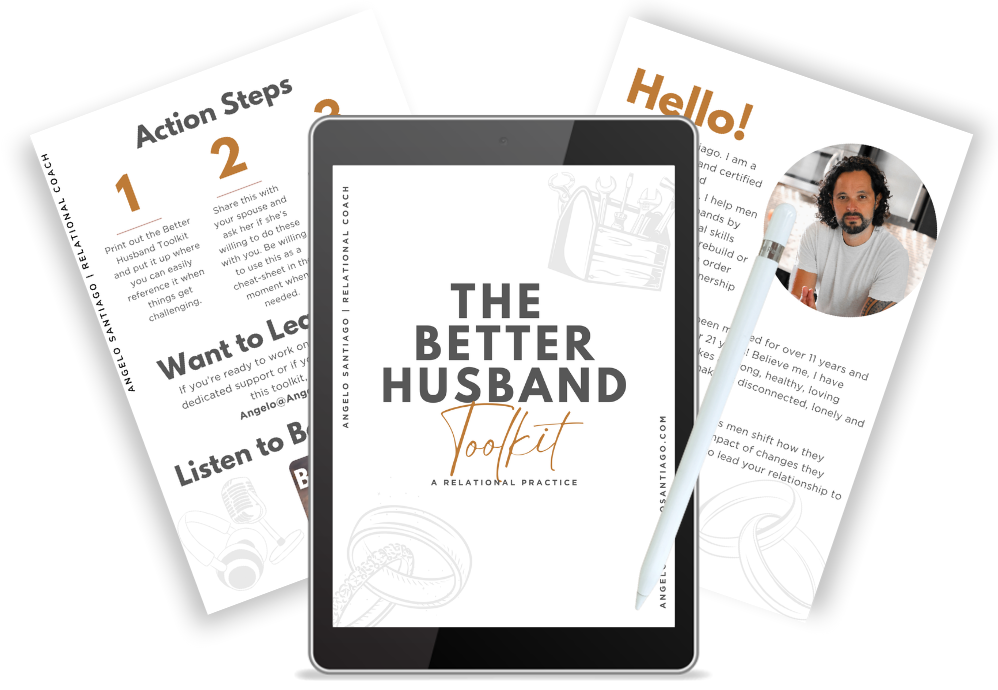
If you want support practicing these shifts consistently, this is the kind of work talked about in the Better Husband Toolkit. It’s a guide that focuses on real relational growth, not surface-level tips.
And don’t forget to listen to the Better Husband Podcast episode, where I dive even deeper into this topic.
Need Help In Your Marriage?
Subscribe to the Better Husband Newsletter to get weekly updates with marriage support, new blog posts, podcast updates and more!
By signing up you consent to receive regular emails from Angelo Santiago with updates and the occasional promotion for services. You can unsubscribe at any time. View our detailed privacy policy in the footer.

Author