
Stop Listening to Respond and Start Listening to Connect
Dec 19, 2025
Most husbands genuinely want to be good listeners, but the moment a conversation carries emotional weight, the mind starts racing. The focus shifts from understanding to planning the next sentence. The goal becomes saying the right thing instead of actually being present for the person across the table. And even when the intentions are good, the result often falls flat. Because listening to respond is not the same thing as listening to connect.
Real listening is a relational skill, not a passive activity. It takes presence, emotional steadiness, and the willingness to move out of strategy mode and into connection mode. When that shift happens, it changes the entire tone of a marriage. This article will walk through why listening is so difficult for many men, what’s happening internally that gets in the way, and a simple, repeatable practice that strengthens connection and trust.
Why Listening Feels Harder Than It Should Be
Many men who struggle to listen well aren’t indifferent or checked out. They care deeply. They want to support their wives. They want their marriages to feel close. The problem isn’t a lack of love; it’s the internal scramble that activates the moment emotions enter the room.
Think about your own experience growing up. From a young age, you may have been taught to solve, fix, anticipate, and execute. At work, those same traits are rewarded—efficiency, quick decision-making, problem-solving, and staying ahead of crises. That programming becomes automatic. So when a partner begins sharing something vulnerable with you, the instinct is to evaluate the situation, determine the “correct” response, and deliver it.
But instead of creating emotional safety, that instinct creates distance—the last thing you want.
When your partner is sharing something important, she isn’t looking for strategy. She’s looking for presence. For someone who’s not just hearing the words but tuning in to the emotional experience underneath them. When that presence is missing, she feels it immediately. Even if the words are kind, even if the response sounds supportive, something feels off.
True listening requires slowing down enough to notice what’s happening internally. It requires catching the reflex to fix or defend and choosing to bridge the gap instead. And once that shift happens, everything about the conversation changes.
Three Listening Pitfalls Most Husbands Fall Into
There are three common patterns that tend to block connection during conversations that matter:
1. The Half-Present Listener
The body is in the room, but the mind is still tied to unfinished tasks, work stress, or internal noise. Everything looks fine on the outside (nodding, smiling, the occasional “uh huh”) but the presence is missing. She senses the disconnect before a single word is spoken.
2. The Problem-Solver

When emotion enters the room, the nervous system goes into high alert. Instead of absorbing what’s being said, the mind starts running calculations:
What’s the right thing to say? How do I fix this? How do I keep this from getting worse?
The intent is good, but the effect is disconnection. Solution mode replaces support mode.
3. The Fairness Accountant
A simple request or expression of need triggers internal tallying:
How much have I already done? Why is this on me? Does she even see what I’m carrying?
Nothing hostile may be said out loud, but the shift is obvious: tight shoulders, different tone, a quick sigh. What she feels isn't resistance to the task but resistance to her.
Just because you may identify with one or all of these patterns doesn’t mean all hope is lost. Actually, your very ability to identify them in yourself is the first step to real change! Each of these patterns is fixable with a small set of skills that bring presence back into the moment. But you have to recognize them as they apply to you, first.
What the Research Says About Why Listening Matters So Much
Listening isn’t just polite behavior—it’s a physiological connector. Research in the Journal of Social and Personal Relationships shows that when a partner feels genuinely understood during difficult conversations, overall relationship satisfaction rises. Defensiveness drops. Couples return to closeness more quickly. Conflict de-escalates. And the best way to make your partner feel understood? Genuinely listening to what they have to say.
UCLA research also found that experiencing empathy triggers the release of oxytocin—the bonding chemical responsible for trust, affection, and emotional safety. That suggests that the simple act of listening without interrupting or fixing literally changes the body chemistry between partners.
And when emotional experiences are dismissed, minimized, or bypassed, the opposite happens: disconnection grows. People start withholding their deeper experiences, and conversations become transactional instead of intimate.
Listening well is one of the fastest ways to strengthen the emotional foundation of your marriage because it signals, Your inner world matters to me. I’m here with you.
A Simple 3-Step Method to Listen With Presence
Here’s a structure that helps you keep connection at the center of the moment. It works in everyday conversations, emotional moments, and situations where you might feel those old patterns start to creep in.
1. Reflect What You Heard
Not word for word—just the core. It might sound like:
“So you felt alone at the party because I was talking to other people instead of staying with you?”
Or:
“You were hoping I’d step in sooner, and when I didn’t, it hurt.”
This does two things: it slows the moment down and shows you’re tracking with her. End with:
“Did I get that right?”
If not, let her clarify and reflect again.
2. Name the Feeling
This is where connection deepens. Identify the emotion behind the words:
“That must have felt disappointing.”
“That sounds overwhelming.”
“That probably made you feel really alone.”
If you’re unsure, guess gently or ask. The point is to be present, not perfect.
3. Ask a Gentle Follow-Up
This keeps the door open:
“Is there more you want to say about that?”
Or
“What was that like for you?”
Or
“Is there something you need from me right now?”
This signals, I’m not rushing past this. I’m here.
The method is simple. But it’s not always easy—especially when old habits, stress, or defensiveness start taking over. That’s why practice matters.
How Deep Listening Starts Changing the Marriage

When your partner feels genuinely heard (without being debated, analyzed, or hurried) you’ll see things start to shift. Your nervous systems will settle. The emotional load will feel lighter. The conversation between you both will soften.
Over time, consistent listening can create:
- fewer escalations
- faster repair after conflict
- more emotional openness
- deeper trust
- greater intimacy (emotional and physical)
The quality of the marriage improves not because more words are exchanged, but because the words land in a place that feels safe.
Presence is what creates closeness.
What to Do When You Don’t Feel Heard
A common frustration for men is putting effort into listening well but not feeling the same in return. The natural reflex can be to withdraw or retaliate. But that pattern leads nowhere good.
The right move is to express the experience clearly and relationally without accusation. A helpful tool for this is the Feedback Wheel:
1. State the facts.
“When I was sharing about the conversation with my boss, you looked at your phone.”
2. Share the feeling.
“I felt dismissed and a little hurt.”
3. Share the story your mind created.
“The story I made up was that my experience doesn’t matter.”
4. Make a specific request.
“As a favor to me, would you stay with me fully in those moments?”
Then let go of the outcome. Accept that she may not respond exactly the way you want her to. Stay open to meeting her where she is.
This approach keeps integrity intact while inviting connection instead of friction.
One Practice This Week
Choose one moment when your wife shares something meaningful, and practice the 3-step method:
- Reflect.
- Name the feeling.
- Ask a gentle follow-up.
Stay with her. Don’t rush. Don’t fix. Don’t pivot.
Let her feel you with her.
You’ll notice the shift, and so will she.
Reflection Questions
After you try it, sit with these:
- Where did my mind want to go while she was talking?
- Could I stay present with her?
- How did she respond when I reflected instead of reacting?
- What was it like to name a feeling?
- What changed in how I felt after the conversation?
These questions build awareness and strengthen the listening muscle over time.
–
Where to Go From Here
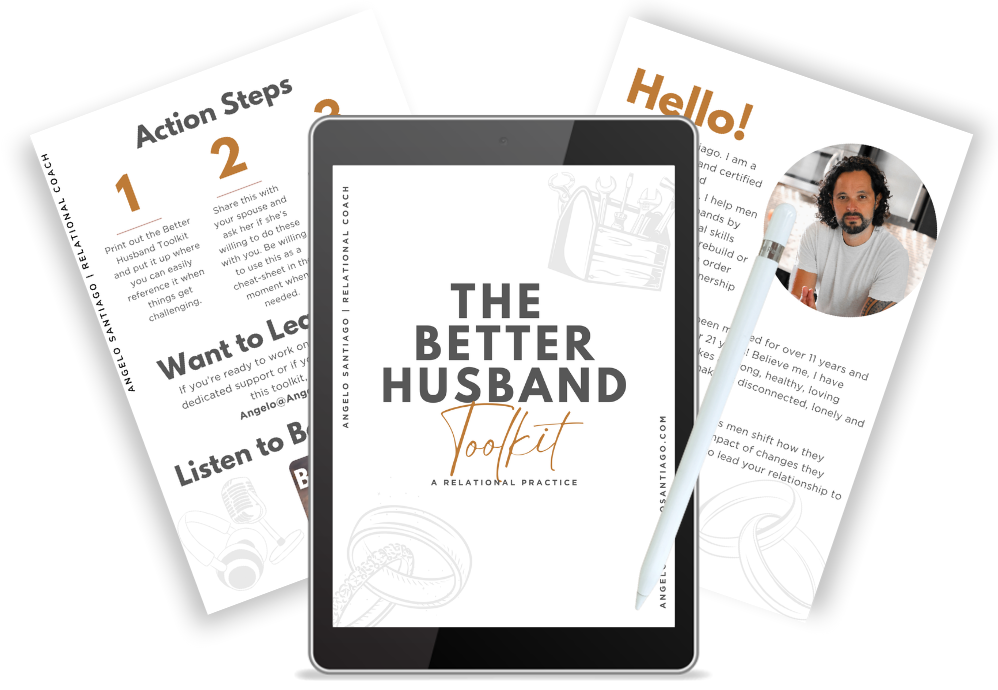
If you’re looking to keep building these skills (not just understanding them intellectually, but practicing them until they become instinct) grab the Better Husband Toolkit. Inside, you’ll find the Feedback Wheel to help you lead conversations with clarity and connection.
Hear more about becoming a better listener in your marriage on the Better Husband Podcast episode and start building the kind of presence that changes your marriage from the inside out.
Need Help In Your Marriage?
Subscribe to the Better Husband Newsletter to get weekly updates with marriage support, new blog posts, podcast updates and more!
By signing up you consent to receive regular emails from Angelo Santiago with updates and the occasional promotion for services. You can unsubscribe at any time. View our detailed privacy policy in the footer.

Author