
The BEST Daily Habits to Keep Your Marriage Strong
Nov 27, 2025
Marriage rarely falls apart overnight. More often, disconnect builds slowly. You see it in the small moments where partners withdraw instead of leaning in, avoid rather than repair, or try to handle everything alone until the relationship feels distant, tense, or fragile.
And yet, the path back to connection is also built in the small moments.
Today, we’ll explore the daily habits that helped turn a struggling marriage into a stable, connected partnership, as well as the same habits any man can begin practicing today to become a more grounded, present, and intentional husband. These habits aren’t theories, scripts, or clinical frameworks. They come from lived experience, from doing the work imperfectly but consistently, and from discovering what actually makes a difference in the day-to-day reality of married life.
Rebuilding after a difficult season? Looking to strengthen what’s already good? These habits offer a practical roadmap for you.
Your Marriage Looks Strong but Feels Strained

From the outside, the relationship looked ideal: successful careers, meaningful service work, higher education, a home, a child, and the stability that many couples spend years trying to build.
But behind closed doors, the relationship was quietly unraveling.
The pattern wasn’t constant fighting or conflict. Instead, it was disconnection. When things felt tense, both partners pulled away instead of leaning in. Stress piled up, resentments deepened, and emotional distance grew. One partner hid in work, achievement, and distractions, because anything else felt easier than addressing the tension at home. The other felt increasingly unseen and unsupported. Neither felt equipped to repair the growing gaps.
Like many men, he didn’t know how to ask for what he needed, how to navigate conflict without shutting down, or how to lead in the relationship without dominating or disappearing.
And like many couples, they reached a moment of crisis before realizing that change was no longer optional—it was urgent.
Getting Honest and Asking for Help
A lot of men try to fix their marriage the same way they fix everything else: alone, silently, and while pretending nothing is wrong. Unfortunately, this is the perfect recipe for isolating oneself. And isolation is one of the biggest contributors to relational breakdown.
Real change begins the moment honesty enters the picture. This means honesty about personal patterns, defensive reactions, emotional avoidance, and the beliefs about masculinity and marriage that weren’t working.
Help comes through mentors, men’s retreats, and honest conversations with people who can reflect back blind spots and offer tools that weren’t learned growing up. Support doesn’t have to mean weakness. In fact, it’s more likely to be the catalyst for transformation. Bit by bit, new habits can form, and changes stick. And slowly, the marriage will shift, too.
The question that follows, then, is how to get there. To answer that, it’s important to remember that the biggest breakthroughs don’t come from grand gestures. They came from daily practices.
Simple Daily Habits to Create REAL Change
These practices fall into two categories:
- Personal habits that help a man stay grounded, calm, emotionally regulated, and aligned within himself.
- Relational habits that strengthen connection, repair, communication, and trust with his partner.
Both matter. When personal regulation slips, relational skills disappear. When relational habits fall apart, even the best intentions get lost in misunderstandings and distance.
Below are the habits that make the biggest difference, and how any man can begin using them today.
Part 1: Keeping Yourself Grounded
1. Starting the Day Slowly
Instead of waking up and jumping straight into stress, tasks, or screens, begin the day with intention. This could be:
- one deep breath
- one minute of quiet
- one gratitude
- one grounding thought about how to show up
A slow start interrupts the automatic, reactive mode that leads to short tempers and emotional withdrawal later. The more you practice a slow start, the more you’ll start seeing the benefits throughout your day.
2. Moving the Body Every Morning
Physical movement is one of the most powerful tools for emotional regulation. A daily morning walk (be it outside or on a treadmill) helps shift stress, clear the mind, and reduce reactivity. Without movement, the day often begins on edge; with it, patience and presence dramatically increase.
3. Incorporating a Cold Plunge or Breath Work
A cold plunge isn’t required, and probably isn’t everyone’s top pick, but practices that shock the system awake or regulate the nervous system can be transformative. Cold exposure, breath work, or even a short meditation helps create calm, clarity, and emotional resilience. If it sounds uncomfortable, that’s okay—it’s supposed to be.
4. Prioritizing Sleep and Nutrition
This may sound basic, but the foundation of emotional presence is physiological stability. When sleep or nutrition suffers:
- patience decreases
- irritability increases
- listening becomes harder
- stress responses intensify
Taking care of the body is an act of integrity and leadership in marriage. Get your 8 hours a night and eat whole foods that nourish your body.
5. Staying Off Social Media
Stepping away from social media has never been more difficult than it is today. However, the benefits of doing so are undeniable. This isn’t because social media is inherently bad, but because it pulls attention outward—toward validation, comparison, and distraction—when the marriage requires presence.
Removing the noise can help re-anchor attention to real life instead of the curated digital version of it.
6. Daily Reflection
A simple daily check-in, whether written or mental, keeps priorities aligned. Questions like:
- What matters most today?
- How do I want to show up?
- What support do I need?
Reflection creates intentionality. It prevents autopilot behavior, which is where most relational damage happens.
Part 2: Relational Habits That Strengthen Connection

While personal discipline builds internal stability, relational habits build connection and a solid foundation for your marriage. These practices helped shift the marriage from reactive and distant to steady and close.
1. Daily Check-Ins
A simple daily connection point with your wife like, “How are we doing?” or “Is there anything we need to talk about?” prevents emotional drift. Don’t treat this like a chore or meeting. Think of it instead as presence. It can be as short as 30 seconds, or as long as 10 minutes. But always be intentional about it.
2. Naming Tension Early
Most conflict escalates because it gets ignored. While it may feel uncomfortable, or like the last thing you want to do, it’s important to recognize the elephant in the room. Early naming sounds like:
- “Something feels off today. Can we talk about it?”
- “I feel a little disconnected—do you?”
This prevents days or weeks of simmering resentment.
3. Repairing Quickly
Instead of waiting hours or days after an argument, the goal is rapid repair. It may sound like:
- “That didn’t feel good. I want to clear it up.”
- “Can we reset?”
Quick repair keeps small ruptures from becoming emotional distance.
4. Expressing Appreciation Out Loud
Appreciation builds emotional safety and goodwill. Examples:
- “I noticed how you handled that. Thank you.”
- “I loved the message you sent earlier.”
- “I really admire how you show up for our family.”
These act as connection builders that strengthen your marriage.
5. Vocalizing Attraction and Admiration
Letting a partner know she is beautiful, funny, strong, valued, and loved reinforces emotional intimacy. Marriage isn’t just about partnership—it’s about affection.
6. Re-aligning on Direction Regularly
Asking questions like:
- Are we on the same page emotionally?
- Are we headed in the same direction?
- Are we working as a team or drifting?
Planned alignment prevents future crises.
Progress, Not Perfection
None of these habits are about being flawless. Instead, they’re about staying engaged.
Some days go well, some don’t. That’s a simple fact of life. The bad days do not define your marriage. Some repairs happen fast, some take effort. Sometimes one partner has the emotional bandwidth; sometimes the other does. What matters is the commitment to return—again and again—to the partnership.
The journey isn’t about achieving a perfect marriage. It’s about building a resilient one.
Don’t Go it Alone
One of the most important lessons from this transformation is that men do better when they stop trying to carry everything alone. There are husbands all over the world doing this work—some rebuilding, some growing, some thriving.
Community accelerates growth. Support builds clarity. Accountability strengthens consistency.
–
For a deeper dive into the daily habits that strengthen a marriage, listen to the full podcast episode that inspired this article.
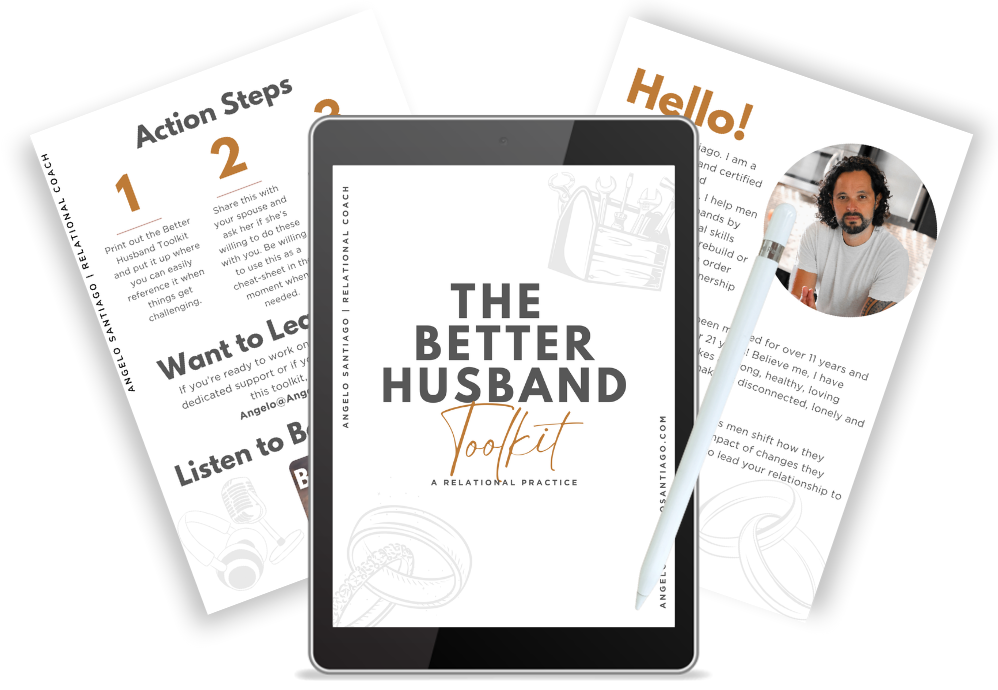
And if you want practical tools you can start using today, download the free Better Husband Toolkit—a set of simple, proven exercises to help you show up with more clarity, connection, and confidence at home.
Need Help In Your Marriage?
Subscribe to the Better Husband Newsletter to get weekly updates with marriage support, new blog posts, podcast updates and more!
By signing up you consent to receive regular emails from Angelo Santiago with updates and the occasional promotion for services. You can unsubscribe at any time. View our detailed privacy policy in the footer.

Author