How to Protect Your Marriage from Outside Opinions — And Why It's Important
When Everyone Has Something to Say
It is December, and that usually means a few things all at the same time.
The lights go up, the year starts winding down, and life fills with this mix of celebration and pressure. You've got work deadlines, family plans, travel, kids outta school, the kind of schedule that never really lets you catch your breath.
And then there are the gatherings. Holiday parties, work events, family dinners, trips back home, people you haven't seen in a while, and people who love you. People who mean well. People who don't always know what to do with the silence that shows up when somebody asks. So how are you two doing?
If your marriage has been going through a rough season, that question hits a little differently. Someone pours you a drink, pulls you aside, and suddenly they're offering opinions. You didn't ask for. Things like, I can't believe she's making such a big deal, or You deserve better than how she treats you, or You need to be tougher, or, I wouldn't let my wife talk to me like that.
Or maybe the comments go the other way towards you from her side of the family, like, I don't know how she puts up with that, or he needs to get it together, or you've been patient long enough, stop waiting for him to change.
Sometimes it's subtle, sometimes it's blunt, but it almost always carries the same energy certainty.
People talk like they know exactly what's happening and exactly what you should do next. And even if you don't show it, even if you shrug it off or laugh or change the subject, something in you feels it. A little doubt, a little confusion, a voice that wonders, do they know something I don't? Should I be listening to them? Are they seeing the truth? And I'm just too close to it.
It's a strange feeling, isn't it? You're already carrying the weight of your own marriage. You're already trying to navigate the tension, the distance, the effort, the hope, and now you've got a chorus of outside opinions, some protective, some reactive, and some just unfiltered, all crowding into the most fragile parts of your life.
And that's what I want to talk about today. Because when a marriage is struggling, when it's tender, when you're trying to rebuild trust or break old patterns or create something new. Outside voices can quietly become one of the most damaging influences in your relationship. Most of the time, the people speaking into your life care about you.
They're not trying to hurt you, but everything they say still comes through the filter of their own story, their own wounds, their history, their beliefs about men, about women, about marriage, about what they never healed in themselves.
And here's what I want you to know. Nobody else lives in your life with your wife. They only see bits and pieces. They see the moment you vent or the moment she breaks down, or the moment something slips through the mask you've been holding together. They don't know your history. They don't know your. Pairs, they don't know your effort or the depth of what you're trying to build. And when you take someone else's advice as truth, without checking it against your own clarity and values, you hand over the steering wheel of your marriage to someone who doesn't have to live with the consequences.
So in this episode, we're going to talk about why outside influences get so loud during the holidays. And how it can quietly undermine the work you're doing. We'll look at how to recognize when someone's advice is actually about their own pain, not your marriage. And I'm going to help you get clear on what you want, what matters to you, what aligns with your values, and what it means to lead your relationship from a place of steadiness instead of noise.
By the end of this episode, you'll know how to protect your marriage from the opinions around you, how to trust your own discernment and how to take the next right step in becoming a better husband, not the steps someone else thinks you should take, but the one that's actually yours. Stick around. You don't wanna miss this one.
How a Small Comment Can Make a Big Impact
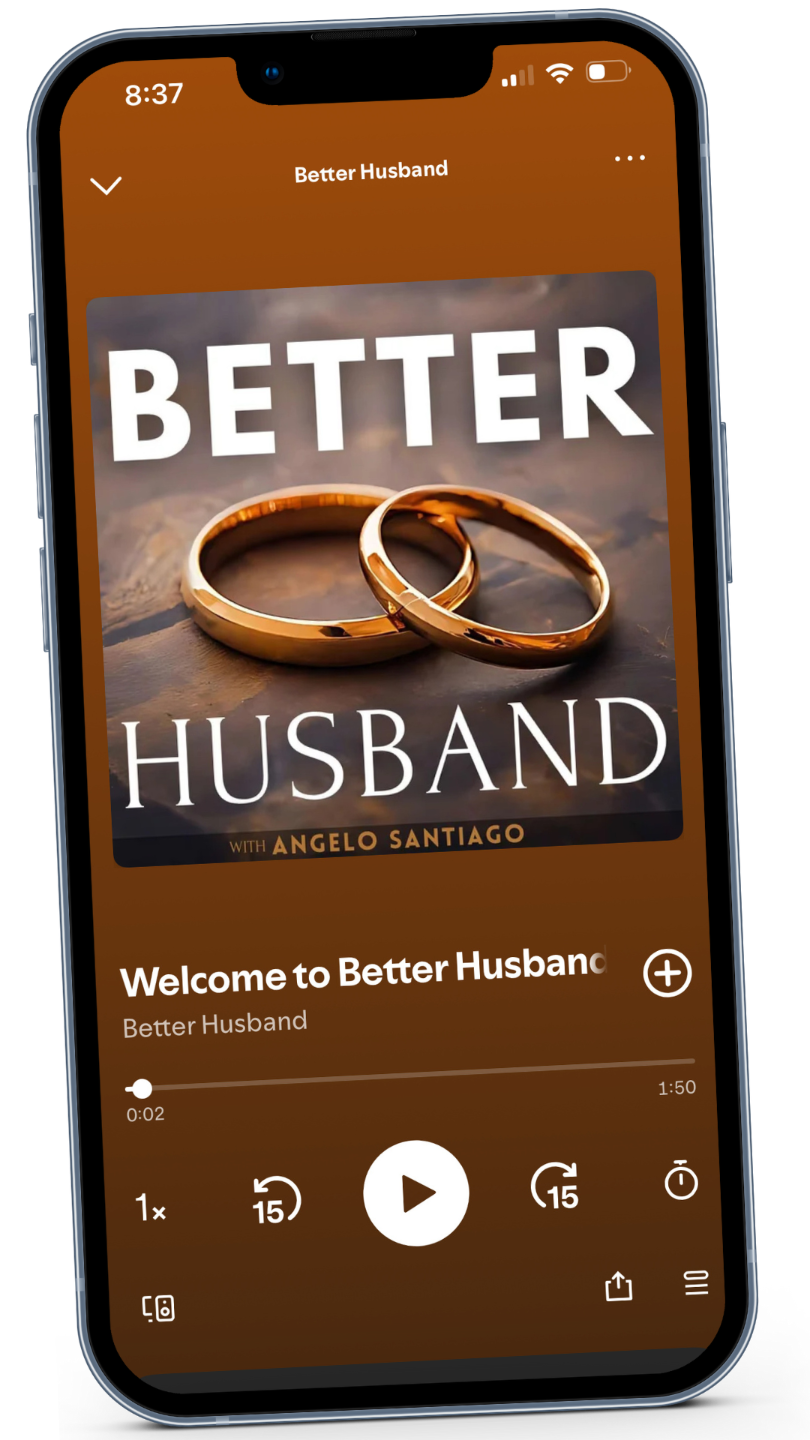
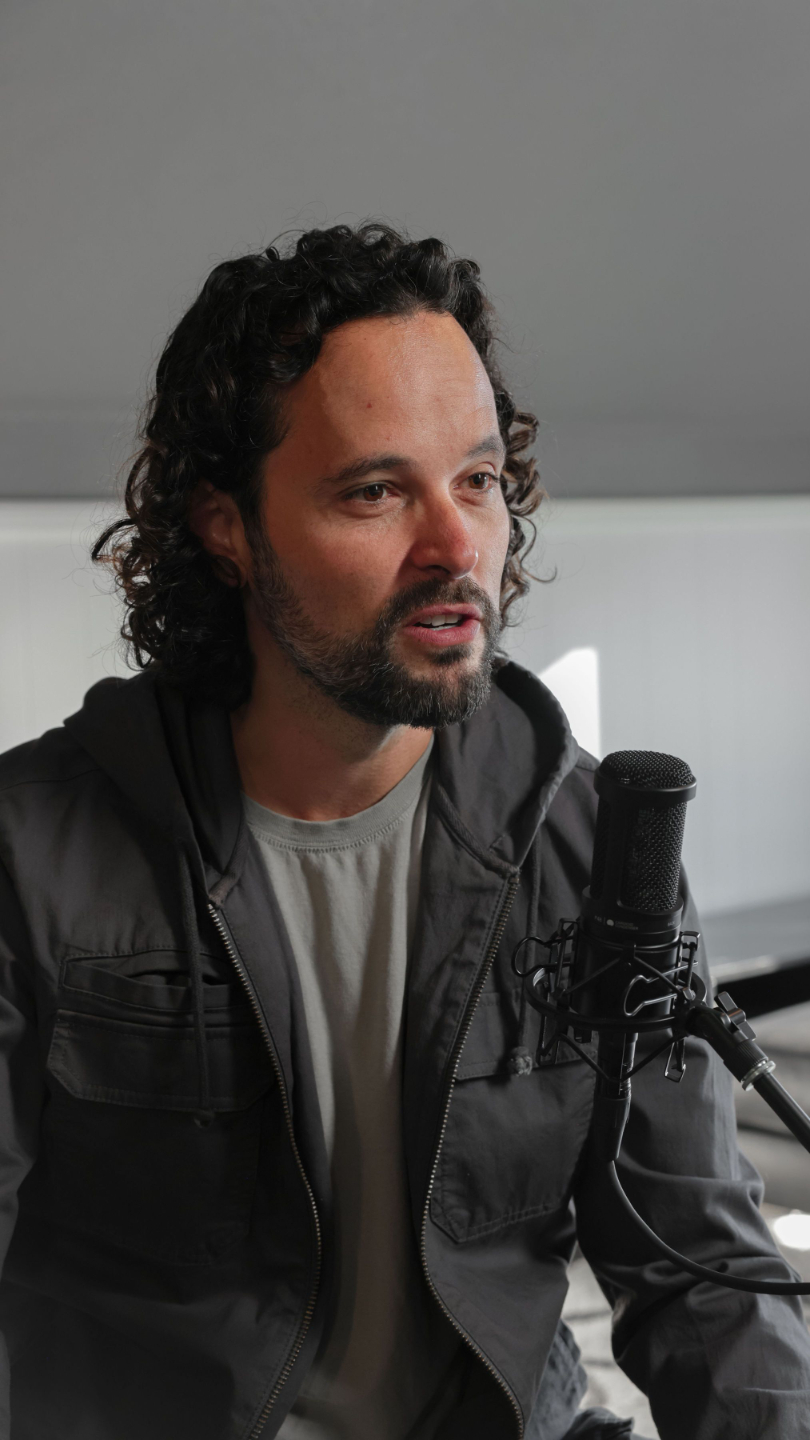
Welcome to Better Husband, the podcast that helps you answer the question, how can I be a better husband? I'm Angelo Santiago, a men's marriage and relationship coach, and every week I bring you practical insights to help you strengthen your marriage and become the best husband you can be.
So a few days ago I opened an email from a man I'm working with, and he's been doing real work in his marriage. He's been slowing himself down, listening more, reacting less, and you can feel the effort, you can feel the hope, and you can also feel the uncertainty that shows up for every man who's rebuilding his marriage.
In the middle of his message, he mentioned something his mother said about his wife. It wasn't the main problem that he was dealing with in his message to me, but it showed up in the flow of his story. And to me, it was a sign that outside voices were creeping into a space that needed to stay protected.
It reminded me of something I had to learn the hard way. When a marriage is trying to heal, you have to pay attention to who you let inside the circle. On the outside life, may look stable. The same routines, the same house, the same rhythm, but underneath something small and new is trying to take shape. A different way of speaking, a different way of listening, a different way of being together. And early growth like that doesn't have much room for disruption.
When I think back to healing in my own marriage, I always picture a little tree, not the one people see now, the strong rooted healthy tree, but the version that came before it. Years ago, the soil we were growing from wasn't that good. The roots were tangled with things we didn't understand yet.
On the outside, the trees still looked alive, but deep down it was weakening. And rebuilding meant pulling up what we thought was solid and planting something new. In the beginning, that new thing didn't look powerful. It looked like a small sapling full of potential. But easily bent if we weren't careful.
And that image came back to me the moment I read his email. Because when someone you trust, a parent, a sibling, a friend starts offering opinions about your marriage, it rarely lands neutrally. You might shrug it off, but the comment stays with you. And if you're in a season where something new is trying to grow, outside input can warp that growth before it ever gets strong enough to withstand any weight.
The part that most men overlook is this. Nobody speaks into your marriage from a blank slate. Every opinion carries its own history. A parent might be reacting from old resentment. A friend might be talking from the pain of their own breakup. A sibling might be speaking from their own loneliness.
Someone else might push you toward leaving simply because they never learned how to repair anything in their own life. And the tricky part, those comments can sound convincing. They can feel protective. They can feel like clarity, but they're not living the life you are living. They're not doing the work you're doing.
They don't see the small wins, the repairs or the moments where your wife softens in a way she hasn't in a long time. They only see fragments and usually the hardest ones.
So when this man mentioned his mother's comment, I felt the weight of it, not because anyone was acting with bad intentions, but because I know how easily an outside voice can shift the ground beneath a man who's trying to stay steady.
It brought me back to that truth I had to learn myself. You can't leave the soil of your marriage exposed when you're trying to grow something new. You have to guard it. You have to be intentional about who gets to influence you.
People can care about you and still misread your marriage. They can love you and still give advice that sends you backward. They can want to help and still encourage you in a direction that breaks the very thing you're trying to rebuild.
And that's why this conversation matters because when you're in that in-between place, not who you used to be and not quite who you're becoming, your marriage needs clarity, steadiness, and protection from anything that pulls you off your path.
That's what we're going to talk about today.
Why Outside Voices Get It Wrong
There's a moment in almost every struggling marriage when the outside world starts getting louder. You're not asking for opinions, you're not looking for commentary, but the people around you can sense that something is off. And before you know it, they're stepping into a space that was never meant for them.
Maybe you've been quieter than usual, or something slipped out in a tired moment. Maybe your wife shared something with her family or a friend caught you on a hard day. Or maybe people are simply reading between the lines and suddenly opinions start showing up. Advice, warnings, judgments, attempts to be supportive.
Sometimes it feels comforting. Sometimes it feels intrusive. Sometimes it feels like somebody is finally saying out loud, what you've kept bottled up . But here's what you need to slow down long enough to see. Outside voices are almost always working with the wrong picture. Not because people are careless or because they want you to fail, but simply because they don't live inside your marriage.
They see moments, but you live the context. They see arguments, but you know what led up to it. They hear frustration, but you feel the weight of everything that came before and everything still on the line.
They don't see the small changes you've been trying to make. They don't feel the atmosphere shift when you're calmer. They don't notice softening or progress or effort because they aren't. There for any of it. And when someone tries to make sense of a marriage based on isolated moments, the conclusions are usually bold and completely off.
For some reason, there's something in our modern culture that treats walking away from a relationship as strength and repair as weakness. The casual way people say, I'd never tolerate that without understanding anything about the actual relationship.
You hear it in how people react. They say things like, she said what I'd be done, or If my wife acted like that, I'd put a stop to it. Or she's walking all over you or in the opposite direction, you'll hear he'll never change, or she deserves better. I don't know why she's still trying. These statements sound confident, but they're not about your marriage.
They're people projecting their own experiences onto your life. A friend urging you to leave might still be angry about his ex. A parent criticizing your spouse may be reacting from old wounds you don't even know about. A coworker pushing dominance may never have learned how to relate without control . And a sibling giving you messy advice about your marriage may be speaking from their own heartbreak, not yours.
When someone hasn't done their own healing, their advice becomes a projection of their pain, not your reality. And bold opinions are easy when you don't pay the price for the outcome. They don't face your wife at the end of the day. They don't live with the tension or the hope. They don't carry the responsibility of the next step. You do.
That's why I like to say don't let people outside the system decide what happens inside of it. It's effortless to diagnose a marriage from a distance. It's effortless to call your spouse names or give you a script you're supposed to follow. It's effortless to speak with certainty when you're not the one doing the work.
The man in the arena, the man actually trying feels something completely different. He feels the responsibility, he feels the fear, the possibility of living side by side. He feels the cost of every choice he makes, and that's what most outsiders never consider.
The real danger isn't that people talk, it's that their voices can drown out your own clarity if you're not paying attention.
This is where steadiness becomes leadership. Not shutting everyone out or becoming defensive, but choosing who actually gets a voice in your marriage. There's a grounded, simple line that captures this. I hear what you're saying, but I am the one who has to live this. It's not combative or dismissive, it's just true.
No one else understands the full story you and your wife are trying to write and no one else carries your commitments and no one else has earned the right to steer your next step.
Your marriage isn't a group discussion, it's not a group forum. It's a partnership between two people and most of its growth happens in places No outsiders ever see.
The sooner you understand that outside voices can't guide your relationship, the easier it becomes to focus on what actually needs your energy.
The Sapling Stage: Protecting Your Marriage During Healing
There's a part of healing most men never think about, and it's one of the reasons early progress can slip away fast. The beginning stages are fragile. From the outside, things might look promising. You're calmer, you're listening more. You're catching yourself before you shut down or escalate, and maybe she's meeting you in small ways with a softer tone, fewer arguments, a little more ease in the room, a little bit more love.
Those shifts matter, but they're new and anything new takes time before it can support real weight. You'll often hear me talk about creating the right environment for change. A context where new relational patterns can take root before the old system pulls everything back into familiar territory. Without that protected space, that right environment, the relationship tends to revert to what it knows.
This is where the sapling image helps. When you're rebuilding your marriage, you're planting something new, a different way of speaking, a different way of responding, a different way of being together. It's alive but it isn't steady yet. It needs consistent conditions to grow into something solid, something strong, and that's exactly when outside influence can cause the most damage.
One comment from someone who hasn't earned the right to speak into your marriage can create tension the relationship isn't strong enough to hold. Something that felt hopeful. Now feels shaky. Something that was soft now feels exposed.
Most people only know the older version of your marriage. They remember the distance, they remember the mistakes. They remember the pain you shared with them. In the hardest moments, they don't see the new habits forming. They don't feel the small, steady shifts that are happening between the two of you.
So when they offer advice or react strongly, they're responding to a story that's already out. Dated. If you're still building confidence, it's easy to mistake their reactions for clarity.
You can find yourself pulled back into an old narrative just when you're trying to write a different one. That's why protecting the early stages of healing matters so much. It's not secrecy, it's stewardship. You don't plant something new and immediately expose it to anything that might knock it over.
You keep it close. You protect the space where it's growing, so it has a chance to take root. Your marriage deserves that same intention when trust is being rebuilt. When you're learning new relational skills, when she's watching to see whether your changes are real, distraction from the outside world can undermine all of it.
This is a season where both of you are stretching into unfamiliar patterns and stretching takes focus. Even well-meaning people can make it harder. A comment from a parent or sibling or friend, especially someone who doesn't understand the work you're doing, can make you doubt yourself and question the progress you've made.
This is why protecting the relationship during healing isn't optional. It's part of the repair. Not forever, not in isolation, but long enough for the new way of relating to find its footing. As the connections strengthens, the relationship becomes more resilient.
It can withstand more, it can recover faster, but in the early stages, the soil matters, the environment matters, the boundaries around the marriage matter. A relationship in repair needs room to grow without interference, and it needs a man who understands that protecting the conditions where change happens is just as important as the change itself.
That's what allows something small to become something strong.
So how do you actually do that? Well, that's what we're gonna start talking about right now.
Becoming the Man Who Decides What’s Next
There comes a point in every man's journey where he has to decide whose voice is going to lead his life. In those quiet spaces where choices are actually made, when the marriage feels uncertain, when the path ahead isn't obvious, when you're pulled between what you value and what everyone else thinks you should do, outside advice is loud. Your own clarity usually shows up as a whisper.
And this is where a lot of men get stuck and all because they've spent years, sometimes decades, getting used to looking outward for direction. Parents, friends, coaches, bosses, anyone who speaks with confidence. So when the pressure rises inside your marriage, it makes sense that you reach for someone who seems sure, someone who can give a quick answer, someone who doesn't hesitate the way you do when you're trying to choose your next step.
But the truth is that certainty isn't the same thing as wisdom and confidence isn't the same thing as truth.
At some point in healing, there's a shift. You stop gathering opinions, and you start listening inward to the part of you that knows the kind of man you actually want to become. That voice? It's quieter than everyone else at first, but it's the one you need.
When you picture the marriage, you want, not the idealized version, but the real one. It becomes easier to see what aligns with that vision and what doesn't. Maybe you want a home where she doesn't have to brace herself. Maybe you want to be someone who can take responsibility without crumbling. Maybe you want to lead with calm instead of defensiveness. Maybe you want connection that feels steady instead of unpredictable,
whatever it is, those things require intention. They require repetition, and they require a man who doesn't get pulled off course every time someone reacts strongly to his situation.
Your marriage needs your steadiness more than it needs anyone else's certainty, and steadiness isn't about becoming rigid, it's about being rooted. It's about knowing your values and letting those values guide you. When you're clear on what you stand for. Outside opinions stop feeling like commands. They become information.
Something you can weigh, not something you have to obey. You start asking different questions. Does this move me toward the kind of marriage I want? Does this reflect the man I'm trying to become? Is this advice about my life or about their fear?
That's what discernment actually looks like. Not hunting for the loudest voice in the room, but paying attention to the quiet one inside of you.
This is also where trust in yourself becomes essential, not blind confidence, grounded. Trust, the kind that forms when you watch yourself show up. Differently when you keep small promises, speaking gently when you want to react, staying present when you want to withdraw, owning something before she asks you to. Those moments, build internal credibility. They remind you that you're capable of leading from a thoughtful relational place.
And when you trust yourself, you become harder to sway. You stop absorbing other people's fears. You stop letting their expectations override your own clarity. You can hear people without losing direction, and you stay anchored to the vision you have for your marriage instead of reacting to whoever speaks the loudest.
That's relational leadership. Choosing actions based on who you want to become, not who someone else believes you are.
Leadership in marriage grows not from shutting out outside voices, but from choosing which ones earn a place in your life. The clearer you become, the simpler the way forward gets. You stop chasing approval and you stop reacting to every opinion that comes your way, and you stop questioning yourself every time someone disagrees with your choices and you start living from your values instead of their expectations.
What your wife actually needs is to feel that you're anchored, that you're acting from intention and not from outside pressure. When she senses that steadiness in you, trust begins to rebuild and respect starts to return and safety grows.
This Week’s Action Steps
Before we wrap up, I wanna give you a few simple things you can actually do this week to stay anchored in your own voice instead of everyone else's.
First name, the voices you've been listening to. Take a minute and actually write them down who's been speaking into your marriage, whose comments replay in your head when you're thinking about what to do next. Just seeing those names on paper can show you very quickly who belongs in that inner circle and who doesn't.
Second, choose one boundary you're going to set around your marriage. One. That might mean you stop sharing details with a certain person. It might mean you change how much you say or how often you bring things up. Think of it as quietly closing a door that was never meant to stay wide open.
Third, reconnect to what you want. Grab a notebook and write a few honest sentences about the kind of husband you're trying to be and the kind of marriage you're trying to build. Don't dress it up. Just put it into words that matter to you. That becomes a reference point you can come back to when other people's opinions start getting loud.
And then bring one grounded moment home. This doesn't have to be a big speech. It can be as simple as looking at your wife and saying, I'm working on showing up with more intention. One sentence, one clear signal that you are paying attention and you are in this.
Questions to Help You Hear Your Own Voice
Now as you move through this week, I wanna leave you with a few questions to carry with you and reflect on.
You don't need a journal session for each one. Just let them sit in the back of your mind and notice what comes up.
The first one is, whose voice have I been letting shape my marriage and why? Not, who's talking the loudest. Who am I actually letting in?
The second, how much of their advice really belongs to their own story and not mine? Where do you see their history, their hurt, their fear showing up in what they're telling you?
And third, if I trusted my own read of this situation, what would be my next move? Not the move that would impress anyone else, the move that would line up with the man I'm trying to become.
Sit with those as you go about your day and use them to learn to recognize your own voice.
Final Takeaway
At the end of the day, nobody else lives inside your marriage. Nobody else sits with the weight of your choices or the hope you're still holding onto or the work you're willing to show up for.
People will always have opinions. They'll always have something to say, but they don't carry the consequences. You do. Your marriage doesn't need more noise. It needs your steadiness, it needs your clarity, and it needs the quiet strength of a man who knows how to trust his own voice.
That's what creates something solid, and that's what creates a stronger marriage that lasts.
If you're ready to take this work deeper and learn how to lead your marriage with more clarity and confidence, that's exactly what we do inside of Better Husband Academy. You can send me an email at [email protected] or visit betterhusbandacademy.com. You can just click the link in the show notes to learn more.
Thanks for being here today, and thanks for doing the work. I'm Angelo Santiago. You're listening to Better Husband. And I'll see you on the next one.