
Why You Resent Your Family Even When You Love Them
Sep 24, 2026
If you’re in a long term relationship or marriage, you’ve probably had one particular moment of confusion.
In it, there’s no question you love your wife and kids, and you know you’re fortunate to have the life you have. And yet, sometimes you feel resentful.
This might happen late at night when the house is finally quiet. You and your wife are exhausted, and there’s a thought you don’t really want to admit:
This isn’t what I thought my life would be.
Before the mortgage, the kids, and the endless responsibilities, you had more freedom. You could decide what to do with your time without checking a calendar or considering what everyone else needed from you.
The confusion comes because you don’t want your old life back. You’re sure about that. But sometimes you miss the person you were before all of this. That can create a painful contradiction: You love your family, but you resent the weight of family life. Then you feel guilty for resenting something you chose.
That resentment doesn't necessarily mean you married the wrong person or built the wrong life. Sometimes, it means you’re still comparing your real life to a version of your old life that exists mostly in your memory.
The Life You Miss May Not Be the Life You Remember
Think about the way you remember your life before marriage and kids. What do you remember most? For many men, the answers range from freedom to spontaneous Friday nights. Exciting trips to extra time for themselves. The feeling that their life belonged entirely to them.
But it’s important to remember the not-so-great aspects too. The loneliness, uncertainty, the empty weekends, the relationships that didn't work out, and the parts of yourself that were already wondering what came next.
Memory isn't a perfect recording, and we naturally tend to hold onto certain moments and lose the details that don't fit the story we're telling ourselves.
That can create a particularly unfair comparison.
You're comparing your real, exhausting present with a highlight reel of your past.
Of course the past wins.
Your present has bills, interrupted sleep, difficult conversations, responsibilities, and people who need you. Your memory gives you the best parts of being younger without making you pay the cost of them.
Once you recognize that, your resentment starts to look different.
Are You Letting the Past Drive the Present?
One useful way to understand this is to think about the younger version of yourself that still wants the freedom he used to have. That doesn’t make you evil or selfish. Your younger version is simply focused on what it wants: more time, fewer obligations, more freedom, less responsibility.
And when your wife needs something from you or your child needs you at the exact moment you wanted to relax, that part of you can interpret their needs as something being taken from you.
Even if you don’t say anything, your reaction can show up as a sigh, a short response, checking your phone while your wife talks, or feeling irritated when your child asks you to play one more time.
The question here is who gets to decide how you respond? The younger version, or the current you?
You can acknowledge that you're tired, frustrated, or craving some time alone without allowing those feelings to decide how you treat the people you love.
Growing up means being capable of seeing beyond your immediate wants and choosing what matters most, while understanding that there might be times you crave certain parts of your past.
Resentment Has a Cost

The problem with unresolved resentment is that it will never stay inside your head. Eventually, it will leak out.
Your wife may tell you about her day, and you technically listen while mentally thinking, What does she need from me now?
Your child may ask you to play, and you agree, but they hear the sigh before you do.
None of these moments seem like a big deal on their own, but repeated often enough, they create distance.
Your wife may eventually stop talking to you about the small things because she senses that you're not really available for them, while your kids start to ask less because they don't want to bother you.
The cruel irony? You can end up pushing away the very people you once wanted this life with.
You think you're protecting the freedom you lost, but instead, you may be teaching your family that they shouldn't need you too much.
Stop Fighting the Life You Chose
All of this isn’t to say that marriage and parenthood should always be easy. You can love your family and still be exhausted. You can be grateful and still need time alone. You can adore your children and miss having fewer responsibilities.
Denying those feelings is the last thing you want to do. Instead, stop turning them into evidence that your current life is the wrong life. At some point, you chose this life.
That doesn't mean every part of your circumstances was consciously planned, or that you can simply choose away every difficulty. It means you can decide how you relate to the life you've built.
There's a difference between a life that happened to you and a life you continue choosing.
Sometimes you have to choose it again.
Instead of thinking, When do I get my life back?, ask yourself:
What if this is my life?
As acceptance, not resignation.
Acceptance of the tired evenings, the bedtime routines, your wife's stories, your kid calling for you, the house that needs work, and the responsibilities you sometimes wish you could escape.
Rather than standing between you and the life you wanted, it may actually be the very life you wanted.
You just stopped noticing it.
How to Start Changing the Pattern

Don’t overwhelm yourself by trying to fix your entire relationship with resentment overnight. Start by noticing where it appears.
1. Catch the comparison
The next time you think, I want my old life back, stop for a moment, and ask yourself what you're actually comparing.
Are you comparing your real present to a realistic version of your past, or to a highlight reel?
2. Let the past tell the whole story
Write down a few things you genuinely don't miss about your old life.
Things like loneliness, uncertainty, or feeling like you were waiting for something more meaningful.
This isn’t to say that your past was bad. It's about allowing yourself to remember every part of it; that it was real, not perfect.
3. Choose your life on purpose
Once a day, take a moment to look at your actual life and acknowledge it. No grand affirmations necessary! Simply recognize: I chose this. I want this. I'm here.
You may not feel completely convinced every time, and that’s okay. The point is to practice choosing instead of constantly resisting.
4. Be fully present for one moment
Put your phone away during dinner. Give your wife your full attention during one conversation. Sit with your child at bedtime without mentally rushing toward the next thing.
Don’t try to be perfectly present all day. Just start with one moment where you're actually there.
You May Have to Choose It More Than Once
Something you may not want to hear, but is a part of the process: The resentment may come back. Especially when you're exhausted.
That's normal.
You don't make this choice once and permanently become a different person. The old comparison can return when you're stressed, overworked, lonely, or simply having a bad week.
When it does, you get another opportunity to notice what's happening. You can acknowledge the part of you that wants freedom without letting it take control, and you can miss aspects of your old life without believing your current life is a mistake.
Being a husband and father isn't the thing keeping you from becoming who you want to be. Quite the opposite! It may just be part of who you're becoming.
You don’t have to stop wanting for yourself, but you do need to stop treating the people you love as the price you had to pay for growing up.
Your life may be heavier than it used to be, but it’s also deeper.
Maybe the shift you need is learning to stop looking past the life you're already in.
–
Keep Going
If this article hit close to home, check out Episode 089 of the Better Husband Podcast for a deeper look at where resentment comes from and how to stop fighting the life you’ve chosen.
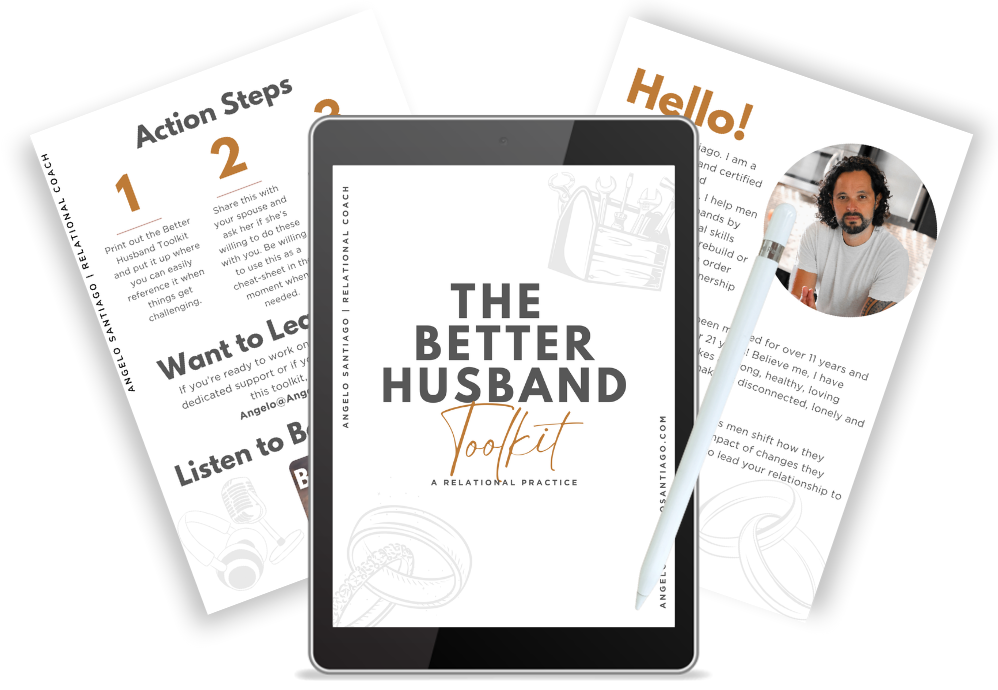
And if you’re ready to keep doing that work, download the Better Husband Toolkit for practical tools to help you become a more intentional, connected husband.
Need Help In Your Marriage?
Subscribe to the Better Husband Newsletter to get weekly updates with marriage support, new blog posts, podcast updates and more!
By signing up you consent to receive regular emails from Angelo Santiago with updates and the occasional promotion for services. You can unsubscribe at any time. View our detailed privacy policy in the footer.

Author