AI Won't Save Your Marriage But It Can Do This
[00:00:00] Why AI Won’t Change Your Marriage
A couple nights ago, I was sitting on my computer doing what I do a lot of these days. I had an AI window open on one side of my screen, my notes on another side, and I was using it to help me think through some ideas, to handle some basic tasks and just generally move faster through work that would've taken me a whole lot longer on my own.
The truth is I use AI all the time now. For brainstorming for meals. I wanna cook for my family, for research, for health, for jokes and riddles to tell my 6-year-old for workouts for questions I used to type into Google and dig around for 20 minutes trying to piece together it myself. So no, I'm not anti ai.
It's incredibly useful. I'm exploring it right along with everybody else, and the technology really is amazing. But the more I've used it, the more one thing has become really clear to me. AI can help you understand a lot of things. It just can't do the hard work for you. That's worth paying attention to because a lot of men are going to start using AI the same way they've used books, podcasts, articles, and everything else that gives them more awareness.
They're going to understand their patterns more clearly. They're going to learn things about communication, emotional presence, repair, and connection faster than ever before. And a lot of that does help, but your marriage doesn't change because you get better information. It only really changes when you start staying in the room instead of shutting down or running away. It changes when you take ownership without turning it into a long explanation about why you did what you did.
It changes when you come back and repair after a hard moment instead of letting the distance sit there for two days.
AI can't do any of that for you. It can't stay calm for you. When your body gets tense and you feel the urge to say something, you know, you probably shouldn't say. It can't apologize to your wife, it can't rebuild trust, and it can't hold you accountable when you slide back into that same old habit next week that you've been trying to avoid.
That's what I want to talk to you about today. I'm not here to bash ai. It's awesome. It's going to help a lot of men get awareness they didn't have before. But awareness by itself has never been enough and certainly not in marriage.
By the end of this episode, you're going to have a much clearer way to think about ai, self-improvement and your marriage.
We're gonna talk about what AI is actually good for, how it can support your growth, where men are going to start overestimating what it can do, and why real change in marriage still comes down to action, practice, and accountability.
So if you've been learning a lot, thinking a lot, maybe even growing in awareness, but things at home, still don't feel that different.
This episode is for you. Stick around. You don't wanna miss this one.
[00:02:38] The Gap Between Knowing and Doing
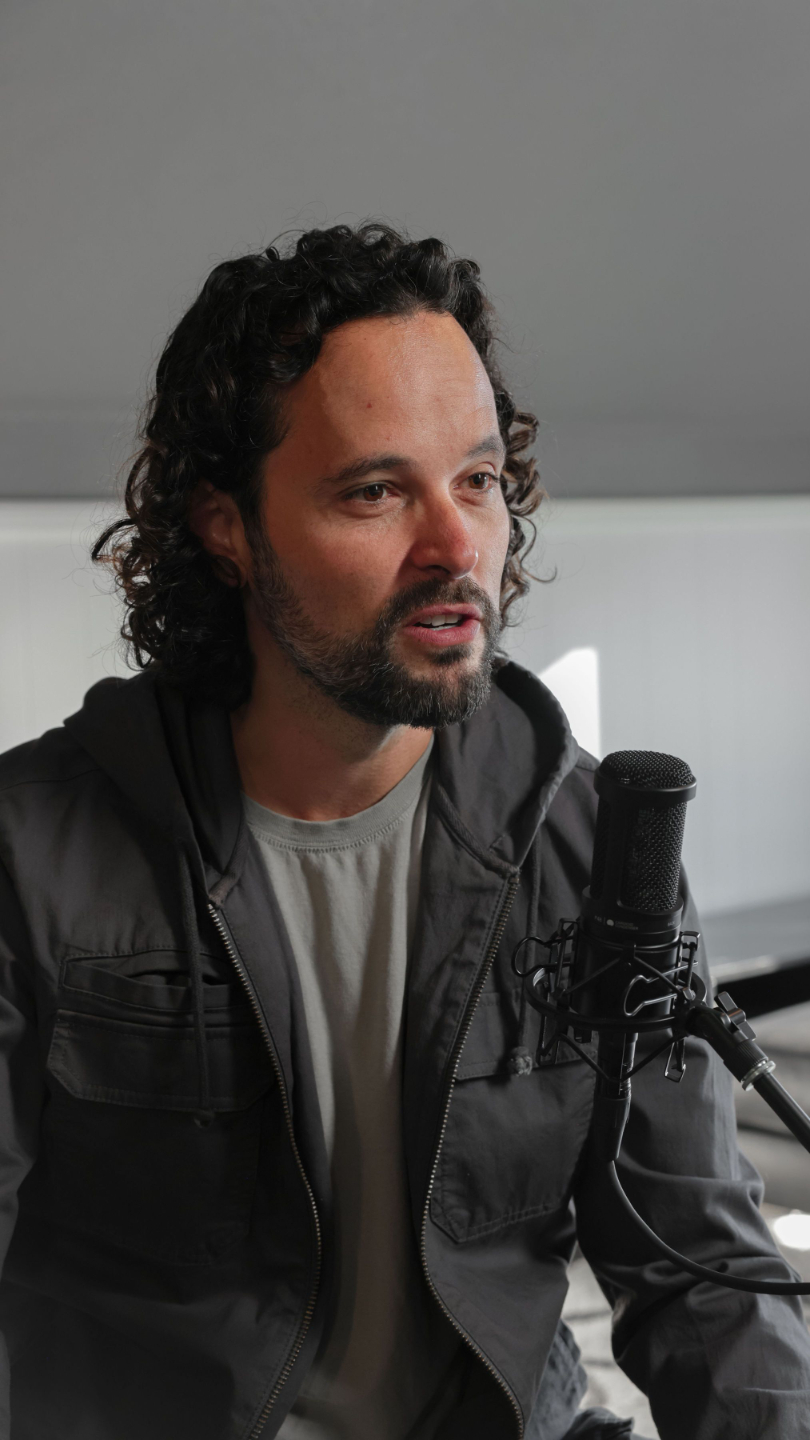
Welcome to Better Husband, the podcast that helps you answer the question, how can I be a better husband? I'm Angelo Santiago, a men's marriage and relationship coach, and every week I bring you practical insights to help you strengthen your marriage and become the best husband you can be.
So let me continue with what I was talking about. I'm sitting there, at my computer, I'm working with my AI chat and I'm asking it questions, going back and forth with it, and it's fast, it's clean, it's efficient. I can feel how much time I'm saving. I can feel how much clearer my thinking is getting just by having a tool to balance ideas off of. There's a part of me that really likes it. I've always been someone who wants to understand things.
I don't like guessing. I wanna know how things work. I wanna know what to do. So when AI comes along and it gives you an answer quickly, helps you organize your thoughts, points you in a direction, there's a real satisfaction there. It feels like progress. So I was using it for everything. Nutrition, workout, recovery strategies, recipes, travel ideas, random questions throughout the day.
If I had a question, I'd go there first instead of searching through five different websites, trying to piece things together. It's helpful. It makes things easier, it makes things faster. But at some point, sitting there in that chair, I had this really simple thought, none of this works unless I do something with it.
I can ask it for the best meal plan in the world, but at some point I still have to get up, go into the kitchen and cook the food. I can look up the most effective workout program, but I still have to walk into the gym, pick up the weight, and actually do the reps.
As obvious as that sounds, it's easy to forget. Because gathering information feels productive. It gives you that sense of movement without requiring you to actually move. And then I started thinking about how this plays out in a marriage. The same thing happens. A man starts learning. He's reading, he's listening. He's trying to understand what's not working, and there's nothing wrong with that.
That's where a lot of guys start. But at some point, every guy gets into a challenging moment with his wife. She brings something up that he doesn't really wanna talk about, and everything he learned doesn't automatically kick in. This isn't an information problem anymore. This is a moment where he has to do it differently.
That's the issue. The space between knowing and doing. The space between understanding your patterns and actually interrupting them. Sitting there that night looking at everything AI could do for me, it became crystal clear. AI lives on one side, your marriage lives on the other. AI can help you understand.
It just can't help you cross that gap in between. Crossing it requires you to be in your marriage with her in the actual moment, and that's where this whole conversation starts to matter.
[00:05:12] Why AI Feels Like Progress
Ai, like every new technology is powerful and in some ways addictive. There's a reason it pulls you in. You sit down with it, and within seconds you've got answers that would've taken you a lot longer to figure out on your own.
It's organized, it's clear, it's sounds right, it feels like you're getting somewhere, so whenever you feel lost or stuck in your marriage or confused about what to do, or unsure how to handle certain moments, that clarity feels really good. Not knowing what to do is uncomfortable. It's that feeling where you're second guessing yourself, you're replaying old conversations in your head.
You're wondering what she meant, what she needed, what you missed. So when a tool comes along that gives you answers quickly, it makes sense that you want to use it. You can ask things like: what should I say when my wife is upset? Or why do I shut down when we argue and you'll get a lot of responses back that sounds solid. Sometimes really solid.
But here's the part that we have to be honest about though, even though that feels like some progress is being made, nothing has really changed yet. Your wife hasn't experienced anything different from you. Your tone hasn't changed, your reactions haven't changed.
The way you handle pressure hasn't changed. This is where it gets tricky. Clarity feels so close to change that it's easy to confuse the two. You start thinking, well, I'm working on this. I'm figuring this out. I'm getting better. But if that's all that's happening, then what you're really doing is building a better understanding of a destructive pattern without interrupting it.
What most men don't see is that your brain rewards you for learning. When you get a new insight, when it finally clicks, when you have language for what you've been feeling, there's a little hit of satisfaction that comes with that. Your brain treats that insight like progress, even though nothing in your life has actually changed.
You feel like you moved, but you didn't move. You just understood the move. That's been true long before ai. I've seen it for years. A man can tell you exactly what he does when he gets defensive. He can explain his pattern. He can name it. He can say he's going to change it, but then the moment happens again at home and he does the same thing. Even though he's truly trying. Understanding and doing are two completely different skills. AI is going to accelerate this. It's going to make things easier to understand. So yeah, AI feels powerful, but we have to be clear about what it giving you.
It's giving you awareness and awareness matters, but your marriage doesn't live in your understanding. It lives in your behavior and how you act when it counts.
[00:07:42] Where AI Can Help You Grow
Now I want to be fair here. Like I already said, I use ai. I like it, and it can help men in some real ways when it comes to marriage.
For one, it can help you put language to things you've never known how to describe. A lot of men live with this vague sense that the marriage isn't right. They know it doesn't feel how they want it to. Feel they know the same arguments keep happening. They know they shut down, get defensive, go silent, pull away, or try to fix everything too fast.
But they don't always have the words for it. Sometimes just getting language helps. It helps to be able to name what you're doing. To say, yeah, that's exactly what happens to me. I start explaining instead of listening or that's it, I go into solution mode because I don't know how to do anything else when I see a problem.
When you can name a pattern, it gets a little harder to keep pretending you don't see it. AI can also help you think through questions you may not have known how to ask. It's useful for self-reflection, for organizing your thoughts before a conversation, for understanding the difference between listening and defending, or repairing and apologizing, or honesty and harshness.
That can be really helpful. So yes, there can be a place for it, but here's where I want you to be careful.
AI has a major blind spot. It's a yes man. If you go to AI and say, I did this and my wife reacted like that, why is she being so difficult? It's probably going to give you a response that sounds understanding and reasonable. It might validate you.
It might explain her behavior in a way that makes you feel like you were right, but it's not going to look you in the eye and say, you missed something here. It's not gonna push back on the way you framed it. It's not gonna ask you the harder question underneath your question. AI doesn't understand your marriage.
It understands what humans have written about marriage. It can pull from that and give you a response. That sounds good. But it's generic. It's not your wife. It's not your history. It's not your pattern. It's not your specific dynamic between the two of you that only someone who knows your situation could speak to.
Sometimes the most powerful thing isn't a better answer, it's just someone who can tell you the truth you are not seeing. AI can give you a better framework. It just can't give you an honest mirror. So use it to think, to learn, to reflect, to prepare. But don't mistake its agreement for confirmation that you're on the right track.
[00:10:01] The Work AI Can’t Do for You
And even though AI can give you tons of great ideas for date nights, for topics to discuss, for presents to buy, for shows, to watch together, your marriage isn't struggling because you need a few more good ideas. It's struggling in the places where your nervous system takes over before your relational brain does.
It's struggling in the three seconds after your wife says something and you feel immediately reactive. That's the moment and no tool can help you there. It cannot feel your body speeding up. It can't notice the tone that just crept into your voice. It can't see your wife's face change when she realizes you stopped listening. It can't put a hand on your shoulder and say, slow down. You're doing it again.
What this comes down to are choices that you have to make for your marriage. Hard ones. The choice to stay present when you wanna leave, to listen when every part of you wants to be understood first, to repair after the miss instead of letting your pride keep you silent for the next two days, to own your part without making it sound like, okay, yeah, I did do that, but you also did this.
That's the work. It lives in your body. It's relational. It happens in the moment, not before it, and not after it. You can know exactly what to do and still not do it when it counts. Every man listening to this knows that's true. You can understand repair, and still avoid the apology. You can understand listening and still interrupt.
You can understand emotional presence and still freeze the second you get uncomfortable.
Every guy I've worked with understands that his wife wants him to be more open, more present, more vulnerable, more emotional, but most of them have no idea how to get there. It's not as simple as someone asking, how do you feel right now? That question can feel like standing in front of a locked door with no key.
That access takes time. It takes depth. It takes being in spaces where you can practice it. And I've watched what happens when men are in those spaces. When a man hears another man, put words to what he's been feeling, but not able to actually say, you see it land. For the first time it doesn't feel like he's the only one.
That kind of moment doesn't come from an AI chat. It comes from being in a room with others. It comes from relationship. And it opens up vulnerability, which opens up access to the very things most men have locked out for years.
AI can describe what emotional presence looks like, but it can't walk you into it.
It can explain vulnerability on paper. It just can't create a space where vulnerability becomes possible.
That's why this work is not just about information. It's repetitive, it's humbling, it's uncomfortable, and it asks something of you. And most men will not do that well alone for very long. Which brings me to the next piece.
[00:12:53] Why You Still Need Real People
Marriage is relational work. The skills you're trying to build do not get stronger by living only inside your own head. They get stronger when they come out into the open. When somebody else can hear how you're thinking and challenge the way you're framing it. When somebody can tell you no, you're still protecting yourself there, or you missed her completely, or that apology still has too much explanation in it, that's feedback a machine cannot give you.
Not the way another person can, not someone who knows your patterns, knows your story, and can see the thing you keep stepping around. So many men spin their wheels for so long on their own. They're trying to improve in private, they're trying to become more relational without being in relationship around the work.
That usually only gets you so far. Left alone you will almost always find a way to make your pattern sound reasonable. You'll explain it away. You'll tell yourself you'll come back to a repair later. You say you'll try again tomorrow. And sometimes later and tomorrow never comes.
Being in this work with other men changes that they're not going to fix your marriage for you. They're not smarter than you. But they can see things you can't see when you're inside your own pattern. I talked earlier about what happens when men are in the room together, how hearing another man's story can open things up and that no amount of reading or listening ever will.
That same dynamic is what makes accountability work. When somebody knows what you're working on, knows the specific move you're trying to make. When things get hard and can ask you, next week, did you do it? You come back and say, yeah, I did, and here's how it went. Or you come back and say, no, I didn't. And instead of judgment, the question becomes, what do you need so that you follow through next time.
That changes the whole thing. The work is no longer just an idea you're entertaining. It becomes a commitment you're practicing. With people around you, who won't let you slide back into the old standard. That's how new patterns take hold. How your standards go up. How you stop relying on motivation and start building consistency.
So use the tools. Use ai, use books, use podcasts, use whatever helps you see more clearly, but then step into real relationship around the work. Information alone doesn't change a marriage. It changes when a man starts practicing differently and keeps at it long enough for his wife to see it's real.
[00:15:09] Your Next Steps: Awareness, Action, Accountability
So let's make this practical. Let's get out of the ideas for a second and into what you're going to do with this. I wanna walk you through your awareness, your action, and your accountability steps coming outta this episode.
First, answer this question. Where in my marriage am I getting clearer but still doing the same thing when things get hard?
I'm asking you that for a reason. That gap between your understanding and what you're doing is the most important thing for you to see right now. As long as that gap stays invisible to you, you'll keep mistaking awareness for progress. Seeing it honestly is where the real change starts.
And here's what I want you to do coming out of this episode. First clean house on your information intake. If you've got 10 podcasts going, five books open, you're on YouTube every night, you're asking AI questions every day. You're filling up your time trying to understand more, and you're not giving yourself the space to do more. Cut it down. Prioritize the sources that are actually moving you forward and let go of the rest.
Now I'm biased, but my recommendation is keep this Better Husband podcast at the top of your list. And if you want more of my support in your inbox each week, you can get on my newsletter at angelosantiago.com.
Second. Your next step. When you learn something and it clicks, don't let it sit in your head. Put it into practice that same day, then put it into practice the next day and the day after that. Keep going until it stops being an idea you agree with and starts becoming something you understand in your body and in your actions.
And third, this work is relational, so commit to not doing it alone. Find somebody who's willing to go through this with you. Someone you can have an honest, vulnerable conversation with. Not someone who just affirms you the way AI would. Not someone who bashes your wife and tells you that she should be grateful to have you. But someone who understands what you're working on and is working on it themselves.
That could be a friend, a men's group at your church, an online community. Whatever it is, just don't try to do this by yourself.
And now. Your accountability coming outta this episode is simple. Do the three things I just walked you through. Clean up your information intake. Start practicing what you're learning instead of just collecting it and find someone to do this work with.
If that third one is the hardest, if you're hearing me say, don't do this alone, and you're thinking, I don't have that, then that's exactly what Better Husband Academy is for. It's a place where you can practice this work alongside other men who are in it too, where you get honest feedback, real support, and the kind of accountability that keeps you moving forward when it gets hard.
If you're ready for that, just go to betterhusbandacademy.com and sign up.
[00:17:52] Closing Takeaway
So before we wrap up, here's what I want you to take away from this episode. AI can give you better answers. More language, more perspective, more awareness, and sometimes that's useful, but it can't do the work for you.
It can't help you take the breath when you feel yourself getting defensive. It can't make you stay in the conversation when every part of you wants to shut down. It can't help you access the emotions you were never taught how to reach. And it can't be the honest mirror that tells you what you need to hear instead of what you want to hear.
Your marriage changes when you become a man who is present in the moments that matter. That doesn't happen through more information. It happens through practice, through being willing to get it wrong and come back and try again, through stepping into spaces where other men can see you, challenge you, support you, and hold you to the standard you want to live ., Not alone, not in your head, in the room, in the practice, in the relationship.
I just wanna say thank you for being here. Thank you for doing this work of becoming a better husband. You're listening to Better Husband. I'm Angelo Santiago. I'll see you on the next one.