Why Your Next Big Move Might Be a Mistake for Your Marriage
[00:00:00] The Moment Everything Feels Urgent
I wanna share something with you that's kind of hard for me to say out loud, and I'm not sharing it because I have it all figured out, or because I'm particularly proud of this part of my story. I'm not. I'm sharing it because I've heard versions of it from so many men through emails and coaching conversations that I know I'm not alone.
And here it is. I spent years of my marriage causing pain. I caused damage. I broke trust. I shut down and withdrew. I hid parts of myself when things got uncomfortable. And for a long time I didn't really see it, or maybe I saw just enough to minimize it.
I told myself that it wasn't that bad that we were fine, that this is just the way marriage looks like after a while. I wasn't waking up every day trying to hurt my wife, but I also wasn't taking responsibility for how my choices were slowly breaking down the connection between us.
Then there was a moment, a conversation where she told me she didn't know if she could keep doing this with me. And that broke something open inside of me.
All at once I could see what I'd been blind to for years. The distance, the hurt, the ways I'd contributed to the very thing I was afraid of losing. And almost immediately fear, rushed in. Fear that it was already too late. Fear that I had messed things up beyond repair. Fear that there was nothing I could do to convince her things could change.
And that fear didn't just sit there, it pushed me towards action, towards fixing, towards the big decisions, towards the belief. That if I could just do the right thing fast enough, everything would settle down again. And looking back now, I can see something clearly that I couldn't see then.
The moves I felt most compelled to make weren't coming from clarity. They were coming from fear. I see the same pattern show up again and again in the men who write to me. Men who suddenly feel an intense pressure to figure out the next big thing they need to do.
In this episode, I wanna talk about that moment. The moment when fear takes over, when urgency starts to feel like leadership, and when you're tempted to make huge decisions, not because it's the right one, but because you can't stand sitting with the fear you're feeling. We're going to talk about why acting from that place almost never creates the outcome you're hoping for.
More importantly, we're gonna talk about what it actually looks like to face the fear instead of running from it, and how doing that changes the way you show up, the decisions you make and the kind of man you become, even when you can't control how the story ends.
By the end of this episode, you'll have a clearer sense of how to take your next steps from grounded self-respect instead of panic, and why trying to control the outcome often keeps you stuck in the very place you're trying to escape. Stick around. You don't wanna miss this one.
[00:02:45] When I Finally Saw What I’d Been Missing
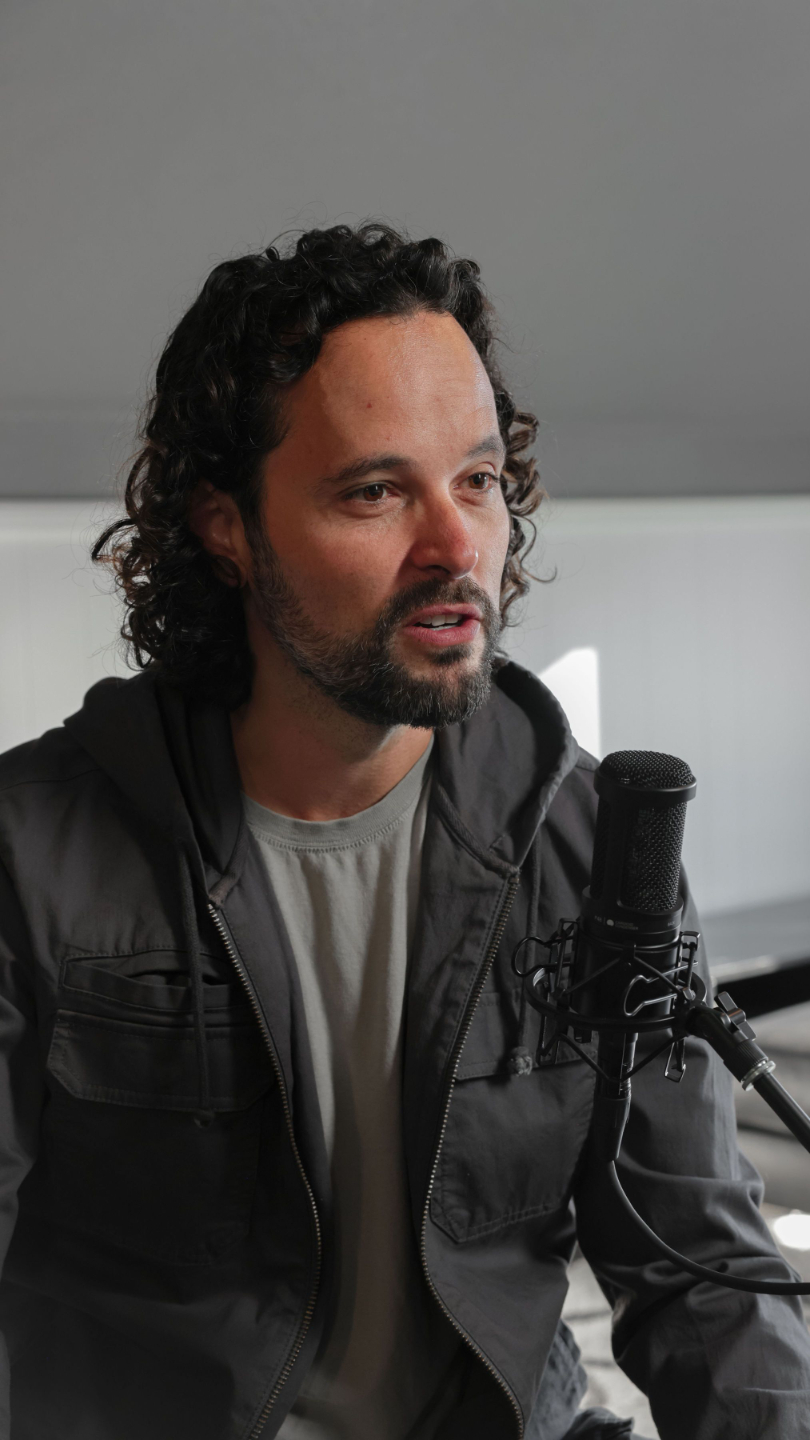
Welcome to Better Husband, the podcast that helps you answer the question, how can I be a better husband? I'm Angelo Santiago, a men's marriage and relationship coach, and every week I bring you practical insights to help you strengthen your marriage and become the best husband you can be.
I want to keep building on what I started to share at the beginning of this episode. When I said that I spent years in my marriage causing pain and breaking trust.
I wasn't talking about one big event. I wasn't talking about a single mistake or one obvious turning point.
You see, my wife and I met when we were young. I was 18. We dated for years before we got married, and then we spent years married before we ever got to the place we're in now where our relationship feels solid, connected, and alive.
There's a long story in between those two points, and a lot of it includes me being emotionally unavailable in ways I didn't fully understand at the time. I didn't think of myself as a bad husband. I didn't think of myself as someone who was actively damaging my marriage.
It was more like drifting. Pulling back, getting quieter, avoiding hard conversations, telling myself I was just tired, stressed, overwhelmed, or dealing with normal life stuff, work, responsibility, pressure, all the things men used to justify not being fully present. What I didn't see then was how those small repeated choices added up. Every time I shut down instead of staying engaged. Every time I avoided, instead of owning something. Every time I hid, instead of telling the truth.
None of it felt big in the moment, and because it didn't feel big, I didn't register it as dangerous.
That's the part that matters. I never really considered that the way I was showing up could actually lead to the end of our marriage. It wasn't on my radar. I assumed we had time. I assumed things would eventually smooth out. I assumed love was enough to carry us through seasons where I wasn't really participating.
And looking back, I can see how numb I had become, not just to her experience, but to my own. I lost touch with how much I cared, how much I loved her, how much the relationship mattered to me. And it wasn't because those things disappeared, but because I stopped tending to them.
And then there was that conversation. I've already mentioned it, but it deserves a little more space. When my wife told me she didn't know if she could keep doing this with me. It wasn't a threat. It was honest, and it landed in a way I wasn't prepared for. That was the moment my eyes opened. All of a sudden I could see the accumulation of years, not just isolated moments, but patterns.
I could see how my withdrawal had impacted her, how my silence had created distance, how the trust I assumed was still there, had slowly eroded. And that's when the fear hit. This was fear that spread throughout my entire body and stayed there.
Fear that I had waited too long. Fear that I had crossed lines I couldn't uncross. Fear that no matter what I did next, the damage was already done. That fear was overwhelming and it made one thing very clear to me in that moment. I couldn't stand the uncertainty of not knowing how this would end.
So I did what a lot of men do when fear shows up like that. I started looking for the one thing that would fix it, the right move, the right decision, the right action that would prove I was serious, that would convince her I was different, that would somehow erase the past and secure the future. At the time, it felt like taking leadership, it felt like urgency in service of the relationship.
It felt like I was finally taking things seriously. What I can see now is that many of those impulses were coming from fear, not from clarity. I wasn't asking what's the most grounded way to repair what I've broken. I was asking what do I need to do so this fear goes away? That distinction matters because when fear is driving the decision, the decision carries fear with it.
And fear doesn't create steadiness. It creates pressure, intensity. It creates moves that are hard to sustain and even harder for somebody else to trust. The real shift for me didn't come from making one big dramatic change. It came later and it came slower. It came when I finally stopped trying to outrun the fear and instead turn toward it.
When I allowed myself to acknowledge the possibility that this might not turn out the way I wanted, when I faced the reality of my contribution without collapsing into shame or trying to defend myself, when I accepted I couldn't control the outcome, but I could control how I showed up from that point forward. That's when things actually began to change. And this is why I wanted to start this episode the way I did, because I hear the same fear, the same urgency, the same scramble for certainty in the men who write to me every week.
Men who are finally awake. Men who can see what's at stake. Men who are desperate to do the right thing and terrified of doing the wrong one. And if you can see yourself anywhere in what I've shared, if this feels uncomfortably familiar or if this is where you're at right now, I want you to listen carefully through this episode.
Because we're going to talk about why fear creates the urge to make big decisions and why those decisions so often miss the mark and what it actually looks like to face fear in a way that leads to grounded, trustworthy leadership instead of panic driven action.
But to understand how men end up in that place, we need to look at how it usually starts, the years when you don't yet realize what's happening and everything still feels manageable.
[00:08:03] The Years That Felt Fine—Until They Weren’t
Because just like me, most men don't destroy their marriage in one single moment. It doesn't happen because of one single fight, or one bad decision, or one thing that goes too far. It happens over time through patterns that don't feel serious enough to demand immediate attention.
That's why it's so easy to miss. In the early years things usually feel fine. Maybe not great, but manageable. Life is full. Work. Responsibility, pressure kids, for some of you. Financial stress. Exhaustion. And when tension shows up, it's easy to tell yourself that it's normal, that this is just the, what marriage looks like after a while, that every couple goes through this and we'll deal with it later.
You're not checked out on purpose. It often feels like you're just getting through the day. Handling what's in front of you, doing what needs to be done, and when issues come up, maybe you minimize them or explain them or tell yourself they're getting blown out of proportion or. You pull back because engaging feels like it's only going to lead to another argument.
And none of that feels dangerous in the moment because nothing is blowing up yet. But what's actually happening during those years isn't nothing. It's accumulation. Repeated moments where distance replaces engagement, where comfort replaces connection, where silence replaces ownership.
You start to normalize things that shouldn't be normal. There's no countdown clock, no clear line that says if you keep going like this, something will break. So you assume you have time.
You assume love will carry you. You assume things will eventually balance out. And you assume that because you're still together, you're still okay. But what most men don't realize is that while you're assuming time is on your side, something else is happening in the relationship. Trust is thinning, hope is wearing down.
Safety is getting harder for her to feel, and often she's been trying to say something about that for a long time. Sometimes through complaints, frustrations, or emotional reactions that are easy to dismiss or defend against. And because it doesn't sound like a crisis yet, it's easy to treat it like background noise instead of information.
Until one day it sounds different. Her tone changes. Her words land heavier. The conversation doesn't end with, we'll figure it out. That's usually when a man realizes he was wrong about how much time he had. And when you really let that sink in, when you fully acknowledge that you didn't see this happening while it was building, it suddenly makes sense why panic shows up the way it does. Because the risk is finally real and you can't unsee.
It once your eyes are open, fear doesn't stay theoretical. It moves into your body, your thoughts and your decisions. And that's where this moment turns your entire life upside down. And from there, the question becomes, what does that fear push you to do next?
[00:10:57] When Urgency Starts to Feel Like Leadership
The reality is that when fear shows up, it rarely announces itself as fear. To most guys like us. It feels more like clarity. Suddenly things seem obvious, urgent, pressing. Your mind locks onto a single question, what do I need to do right now?
And that question carries weight because the stakes finally feel real. You're no longer dealing with vague dissatisfaction or background tension. You're staring at the possibility of loss, of regret, of consequences you can't undo. So your system looks for certainty. Not emotional certainty.
Practical certainty. Something concrete you can point to and say, this proves I'm serious. Something that feels decisive enough to counter the fear. Something that gives you the sense that you're finally taking control. This is where fear starts to masquerade as leadership. It feels responsible. It feels mature.
It feels like you're finally stepping up. You're not avoiding anymore, you're acting. But there's an important difference between action that comes from clarity and action that comes from panic.
So the decision gets bigger. Quitting a job, moving cities, making sweeping promises, rearranging your entire life overnight. And none of these moves are inherently wrong.
That's important to say. What matters is where they're coming from. When fear is in the driver's seat, the goal isn't repair, it's relief. Relief from the uncertainty, the waiting and the sitting with the possibility that this might not turn out the way you want. And because those big moves feel decisive, they create a temporary sense of calm.
For a moment it feels like you've done something meaningful, like you're back in control. But that calm. It rarely lasts because fear-driven decisions carry fear with them. They come with pressure, with expectation, with a demand that the other person respond quickly to reassure you or recognize the sacrifice you're making.
And when that doesn't happen, when trust doesn't magically reappear, or the relationship doesn't stabilize right away, the fear comes roaring back. Sometimes stronger than before. That's when men often double down. Another promise, another adjustment. Another attempt to force certainty in a situation that doesn't offer it.
This is the trap. Fear convinces you that speed equals leadership. That urgency equals commitment. That doing something big is better than sitting in the discomfort of not knowing. But leadership in moments like this requires something completely different. It begins with first recognizing that the urge to act might actually be the urge to escape.
Escape the fear, escape the responsibility of sitting with uncertainty, escape the humility of acknowledging that outcomes can't be controlled. Until you can see that clearly, it's almost impossible to tell the difference between a bold move and a reactive one. And that's why the most important work in moments like this isn't figuring out the next decision.
It's learning how to face the fear that's trying to make the decision for you.
[00:13:56] Why Big Moves Don’t Rebuild Trust
One of the most confusing parts of this moment for men is that the moves they're tempted to make feel like the right ones. They're costly, they're visible, they require sacrifice, they can feel obvious. The thought is, if I'm willing to give up this much, then she'll see how serious I am.
That logic makes sense on paper, but trust doesn't rebuild on paper. Trust rebuilds through experience. This is where big fear-driven moves usually fall short. When trust has been damaged, what your wife is trying to figure out isn't whether you can make a dramatic change. She's trying to answer a much more personal question.
Is this different or is this just intense? Intensity and change can look very similar at first. Both come with effort. Both come with emotion. Both can sound convincing.
The difference is what happens over time, because big moves often come with a hope that says, I've done something significant now things should feel better. And when they don't feel better quickly, frustration creeps in. You start wondering why she's still hesitant, why she's not reassured yet, why she's not responding the way you expected.
From her side, though the experience is different. A big move doesn't answer the question of consistency. It doesn't show how you'll handle discomfort next week. It doesn't show how you'll respond when she brings something up that you don't like. What rebuilds trust isn't the size of the change, it's the reliability of the pattern that follows.
Can you stay present when it's uncomfortable? Can you listen without defending yourself? Can you own your impact without spiraling into shame or shutting down? Can you show up the same way when no one is watching or applauding? Those questions don't get answered by one decision, no matter how dramatic it is. They get answered slowly.
This is where fear tends to distort things again. When you're scared, waiting feels unbearable. You want proof that the effort is working, you want some signal that you're on the right track. And when that doesn't come, the temptation is to do more. Another change, another promise, another attempt to force momentum.
But piling intensity up on top of uncertainty doesn't create safety. It often does the opposite. It can make her feel like she's being asked to trust faster than she's ready, or worse, like she's responsible for calming your fear by responding a certain way.
And that's not something trust grows from. The hard truth here is this, if a relationship has been shaped by years of disconnection, it can't be repaired by a single act, no matter how sincere it is.
Repair requires repetition. Consistency. Predictability. It requires you to show over time that you can tolerate discomfort without reverting to old patterns or panicking when things don't immediately improve. And until you understand that, it's easy to keep reaching for bigger and bigger actions hoping one of them will finally be enough.
What actually needs to change isn't the scale of what you do, it's the place you're doing it from. And that's where this turns again, because if big moves aren't the answer, the real question becomes what does it actually look like to face the fear instead of trying to outrun it
[00:17:10] What Facing Fear Really Looks Like
When I talk about facing the fear, I wanna be very clear about what I don't mean. I don't mean spiraling. I don't mean sitting alone at night replaying worst case scenarios until you can't sleep. And I definitely don't mean resigning yourself to failure. Facing the fear isn't about letting it take over it's about stopping the reflex to run from it.
For most men, fear shows up as something to eliminate, something to manage, something to fix as quickly as possible, and that instinct didn't come outta nowhere. It's something many of us were taught early on. Don't be scared. Man up. Push through it. Do something.
We learned that being a man meant charging forward. Putting on armor and making the fear disappear through action. And on the outside that can look like confrontation, but internally it's often avoidance. We're not actually facing the fear, we're trying to outrun it by doing something big enough to drown it out.
So when fear shows up in your marriage, the move you've been trained to make is forward and fast. Fix it. Solve it. Prove something, make the feeling go away. But the fear doesn't actually go away when you try to outrun it, it just pushes you into action before you're grounded enough to choose wisely.
The mature, healthy way to face fear isn't to charge at it or suppress it, it's to turn toward it, acknowledge it, and stay present long enough to let it inform you without letting it take over.
So here's how you do that. Facing the fear starts with naming it honestly. Not I'm stressed. Not I'm overwhelmed. But something closer to, I'm afraid my marriage might end. I'm afraid I've caused damage I can't undo. I'm afraid of what it would mean about me if this falls apart.
Most men never let themselves say that part out loud, even to themselves. As long as the fear stays vague, it has power. Once you name it clearly something can actually change. You're no longer reacting to an undefined threat. You're standing in front of a reality that can be acknowledged, felt, and faced.
The next step is allowing yourself to sit with what that fear brings up without trying to escape it. That might be grief, regret, sadness, a sense of responsibility you've been avoiding. This is usually the point where men want to jump ahead to reassure themselves, to figure out how to make it better, to start planning the next move.
But facing the fear means staying right here a little bit longer. Long enough to ask a deeper question: If the thing I'm afraid of actually happened, who would I be then? Not in a self attacking way or a verdict of your worth, but as an honest reckoning. Would you still be a man capable of growth? Would you still be someone who can take responsibility? Would you still be able to live with integrity even in loss?
This is where acceptance comes in. Not acceptance of an outcome, but acceptance of reality. Reality that you don't control what another person chooses. Reality that repair doesn't guarantee reconciliation. Reality that doing the right thing doesn't always protect you from pain. That's a hard place to stand. But it's also the place where fear loses its grip.
Because once you stop using action to protect yourself from that fear, you can choose how you show up without trying to control the outcome. From here, decisions change. They're no longer about stopping the fear. They're about aligning with your values. They're about becoming someone you can respect regardless of how the story ends.
This is the difference between fear-based action and grounded leadership. One is driven by what you're trying to avoid. The other is guided by who you're choosing to be. And once you can stand in that place, even briefly, you're finally in a position to take steps that actually build trust instead of pressure.
Which brings us to something most men try to skip over entirely. The fact that facing fear alone is almost impossible. And that's what I want to close out this episode with.
[00:21:09] Why Doing This Alone Makes It Harder
One of the most common things I hear from men in this place is some version of, I don't wanna put this on anyone else. You don't wanna burden your wife with your fear. You don't wanna worry your friends. You don't wanna admit how scared you actually are to anyone. So you hold it in. You think you should be able to handle it on your own, that if you just think it through enough, pray enough, work hard enough, something will click and the fear will settle down.
But fear doesn't work like that. When fear stays trapped inside your head, it gets distorted. It turns into overthinking, mind reading, and urgency. Every silence means something. Every interaction feels loaded. Every decision starts to feel like it carries the weight of the entire relationship. That's why doing this alone almost always leads back to the same place.
Panic driven action. Fear doesn't settle because you figured out a solution. It settles when you're not alone with it anymore. There's something powerful about saying the fear out loud to another grounded human being and not having them rush to fix it. Not having them tell you what to do. Not having them minimize it or talk you out of it.
Just having someone stay with you while you name the thing you're afraid of. When you say it out loud, I'm afraid this might end. It stops bouncing around, unchecked in your head, and it becomes something you can actually stand in relationship to. This is where choosing the right person matters. Not someone who will hype you up, not someone who will give you a 10 step plan or tell you everything's gonna be fine.
You need someone who can hold space. Someone who can hear your fear without panicking themselves. Someone who won't turn your vulnerability into advice or pressure. That might be a coach, a therapist, a mentor, a trusted friend who's emotionally grounded.
What matters isn't the role, it's their capacity to stay steady. Because when your fear is met with steadiness instead of urgency, you begin to find your steadiness too. You start to realize you don't have to do anything immediately. You don't have to prove anything. You don't have to decide your entire future tonight. And from that place, you're much less likely to reach for dramatic moves just to escape the discomfort.
And there's another reason this matters. When you practice naming fear with someone who can hold it, you're training yourself to stay present instead of shutting down or overcorrecting. You're learning how to tolerate uncertainty without collapsing or lashing out. And that skill doesn't just help you make better decisions, it changes how you show up in your marriage. You become less reactive, less defensive, more grounded, and that steadiness is often the very thing your relationship has been missing.
This is all about refusing to let fear isolate you because fear thrives in isolation. Leadership grows in relationship. And once you stop trying to carry this alone, you're finally in a position to take the next step.
[00:23:58] How to Take the Next Right Step
So let's bring this down to something real you can actually work on this week. Here are three things I encourage you to do. First, tell yourself the truth about the fear you're carrying. Not in a vague way. Name it clearly and directly. Finish this sentence. I am afraid that. Say it plainly. Don't rush past it or try to clean it up. This is about acknowledging what's actually here.
Second, say that fear out loud to one grounded person. Choose someone who can listen without steering you, fixing you, or pushing you toward a decision. Someone who can stay steady while you share something that feels heavy and unresolved. That might be a coach, a therapist, a mentor, or a trusted friend who has the capacity to hold this with you. When fear is spoken and held, it loses its grip. It stops running the show from the background.
Third, shift your focus from big moves to steady behavior. Choose one way of showing up that reflects the kind of man you want to be regardless of how this turns out. Something repeatable, something sustainable, something that doesn't rely on a reaction from her to feel worthwhile. That's where trust is actually built, and just as importantly, that's where self-respect is built too.
[00:25:14] A Question to Sit With
Finally, here's one question I want you to sit with after this episode. If I accept that I can't control the outcome, what would it look like to show up grounded, consistent, and open anyway? Don't answer it from fear. Don't turn it into a plan. Just let it guide you. Because when you can face that question, honestly, fear stops making your decision for you. And from there, the next steps come from self-respect instead of panic.
[00:25:41] Closing Takeaway
Here's what I want you to take away from this episode. Fear doesn't mean you failed. It means you finally see what's at stake.
What matters now isn't how fast you act or how big the next move is. What matters is whether you're willing to face the fear without letting it drive you. Whether you can choose steadiness over urgency and integrity over control.
You don't rebuild trust by proving something. You rebuild it by becoming consistent. And you don't get there by outrunning fear, you get there by turning toward it. And deciding who you want to be, even when the outcome isn't guaranteed.
Like I mentioned earlier in the episode, facing fear alone can be really hard. If you're looking for a place to do this work with support, I offer both one-on-one coaching and a group online program. Better. Husband Academy is a space where you can connect with other men who are facing similar challenges and where I can guide and support you as you learn how to show up with more clarity in your marriage. You can find out more at betterhusbandacademy.com.
Thanks for spending this time with me today. If something in this episode stood out, take a moment to sit with it before jumping into action. Remember, progress doesn't come from intensity, it comes from consistency.
Until next time, keep leaning into this work. You're listening to Better Husband. I'm Angelo Santiago, and I'll see you on the next one.